
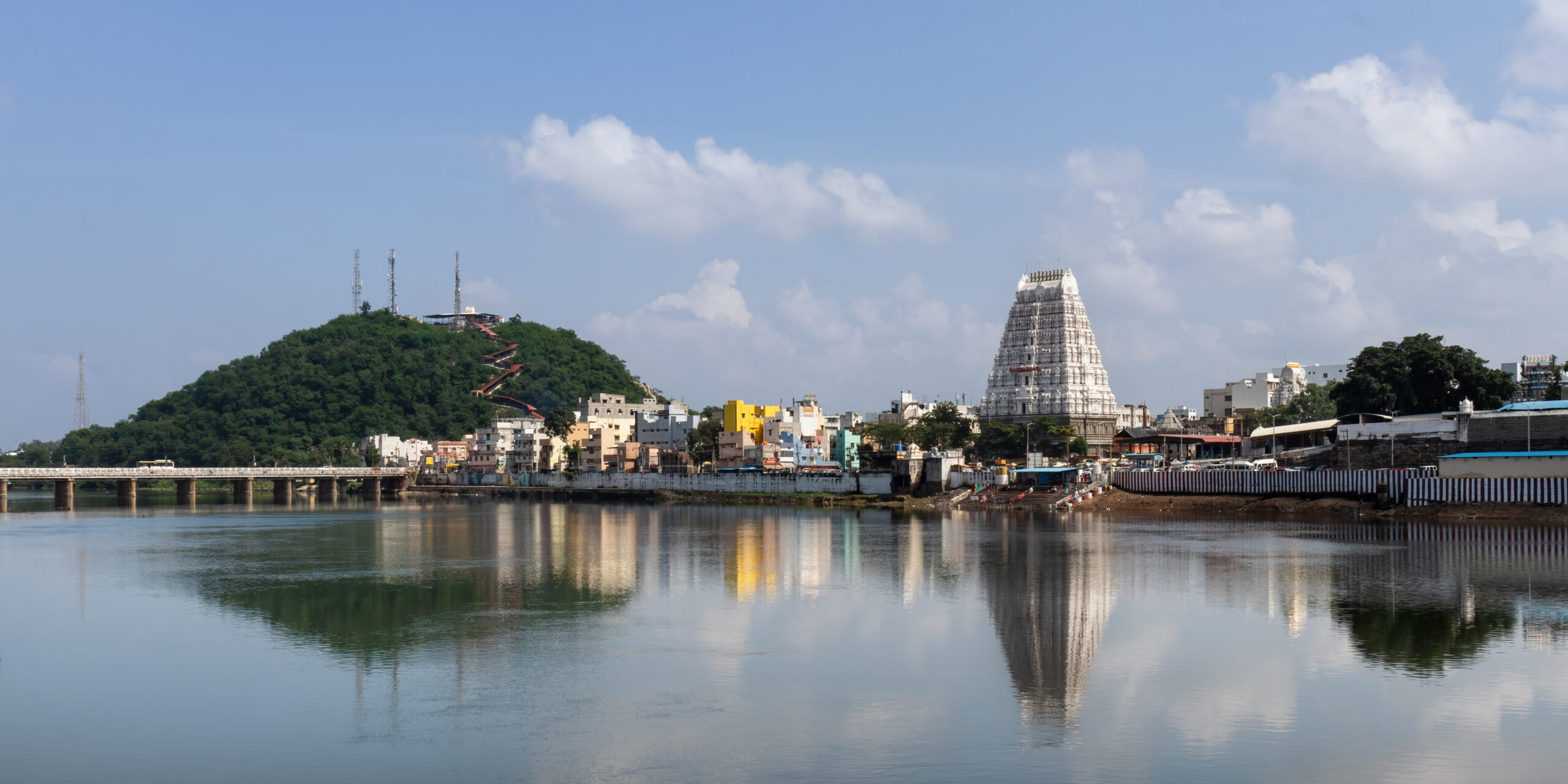
Srikalahasti Gnanaprasunambika Shakti Peetha – The Temple of Divine Wisdom
The Srikalahasti Gnanaprasunambika Shakti Peetha in Andhra Pradesh is one of the most spiritually significant temples in South India. Located on the banks of the Swarnamukhi River near Tirupati, this sacred shrine combines the worship of Lord Shiva as Kalahasteeswara and Goddess Parvati as Gnanaprasunambika, the embodiment of divine knowledge.
The temple is especially revered as one of the Pancha Bhoota Sthalams, representing the element Vayu (air). Devotees believe that visiting this temple helps remove planetary afflictions, brings mental clarity, and grants spiritual enlightenment.
Mythological Origins of the Temple
According to temple legends, the name Sri Kalahasti originates from three devoted worshippers of Lord Shiva:
Sri (Spider)
Kala (Serpent)
Hasti (Elephant)
These three creatures worshipped Shiva with intense devotion. Pleased with their faith, Lord Shiva granted them liberation and the place came to be known as Sri-Kala-Hasti.
Another legend connects the temple with Goddess Parvati, who performed penance here to gain spiritual wisdom. Lord Shiva blessed her with the name Gnanaprasunambika, meaning the divine mother who blossoms knowledge.
The Vayu Lingam of Sri Kalahasti
The temple is famous for the Vayu Lingam, representing the element of air among the Pancha Bhoota temples of Shiva.
Unlike other temples, the flame of a lamp inside the sanctum constantly flickers despite the absence of airflow. Devotees believe this mysterious movement symbolizes the presence of the Vayu element.
The Shiva Lingam is considered Swayambhu (self-manifested) and is not touched during regular worship rituals.
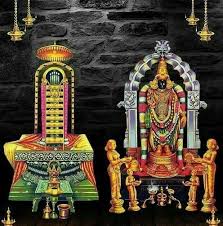
Goddess Gnanaprasunambika – The Bestower of Knowledge
The shrine of Gnanaprasunambika Devi lies within the Sri Kalahasti temple complex. She is worshipped as the divine mother who grants wisdom, clarity of mind, and spiritual awareness.
Her name combines three Sanskrit words:
Gnanam – knowledge
Prasoonam – blossoming flower
Ambika – the divine mother
Devotees often pray to the goddess for:
educational success
spiritual insight
peaceful family life
removal of ignorance
The Story of Kannappa Nayanar
One of the most famous legends associated with Sri Kalahasti is the devotion of Kannappa Nayanar, one of the 63 Shaivite saints.
Kannappa was a hunter who worshipped Shiva with deep devotion. When he noticed blood flowing from the Shiva Lingam’s eye, he offered his own eye to stop the bleeding. When the second eye of the Lingam started bleeding, he prepared to sacrifice his remaining eye as well.
Moved by this ultimate devotion, Lord Shiva appeared before him and granted him liberation.
This story symbolizes the power of pure devotion beyond rituals.
Temple Architecture and Layout
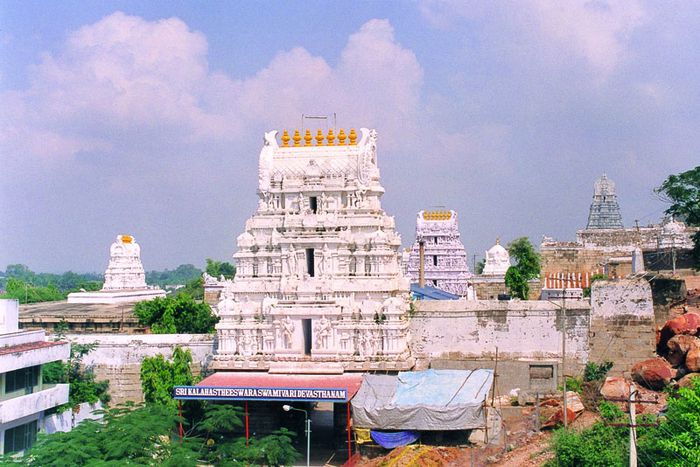
The Srikalahasti temple complex showcases impressive South Indian architecture influenced by the Chola and Vijayanagara dynasties.
Key architectural highlights include:
towering gopurams visible from miles away
intricately carved mandapams
a large 100-pillar hall
beautifully sculpted corridors
The massive Raja Gopuram, built by the Vijayanagara emperor Krishnadevaraya in 1516, stands as a prominent landmark of the temple town.
Rahu-Ketu Dosha Nivarana Puja
Sri Kalahasti Temple is widely known for its Rahu-Ketu dosha nivarana puja, performed by thousands of devotees every day.
Many people visit this temple to perform this ritual to overcome astrological issues related to the shadow planets Rahu and Ketu.
Devotees believe that performing this puja with sincere faith helps remove obstacles in:
career
marriage
health
spiritual progress
Major Festivals Celebrated
Several grand festivals are celebrated at the Srikalahasti temple, attracting pilgrims from across India.
Maha Shivaratri
The most important festival dedicated to Lord Kalahasteeswara. The temple celebrates a grand 12-day Brahmotsavam.
Navaratri
During Navaratri, special decorations and rituals are performed for Gnanaprasunambika Devi.
Karthika Deepam
The temple glows with thousands of lamps, creating a magnificent spiritual atmosphere.
Spiritual Importance of Sri Kalahasti
Sri Kalahasti is often called Dakshina Kailasa, meaning the Kailasa of South India.
Devotees believe that worshipping at the Srikalahasti Gnanaprasunambika Shakti Peetha brings:
spiritual wisdom
relief from karmic obstacles
inner peace and clarity
The temple’s association with the Vayu element also symbolizes the movement of life force and consciousness.
How to Reach Sri Kalahasti
Sri Kalahasti is well connected by road and rail.
Nearest Airport: Tirupati Airport (about 25 km)
Nearest Railway Station: Sri Kalahasti Railway Station
Distance from Tirupati: about 36 km
Regular buses and taxis connect the temple town with Tirupati and nearby cities.
Best Time to Visit
The best time to visit the Srikalahasti Gnanaprasunambika Temple is between October and March when the weather is pleasant.
Major festivals such as Maha Shivaratri and Navaratri also attract thousands of pilgrims during this period.
FAQ – Srikalahasti Gnanaprasunambika Shakti Peetha
1. Where is Srikalahasti Gnanaprasunambika Shakti Peetha located?
Srikalahasti Gnanaprasunambika Temple is located in Srikalahasti town in Tirupati district of Andhra Pradesh, India. The temple lies on the banks of the Swarnamukhi River and is about 36 km from Tirupati.
2. Why is Sri Kalahasti Temple famous?
Sri Kalahasti Temple is famous for three main reasons:
It is one of the Pancha Bhoota Sthalams representing the element Vayu (air).
It is known for Rahu-Ketu dosha nivarana puja, performed by thousands of devotees.
It is associated with the legendary devotion of Kannappa Nayanar, one of the greatest devotees of Lord Shiva.
3. Who is Goddess Gnanaprasunambika?
Gnanaprasunambika is the divine consort of Lord Kalahasteeswara (Shiva). She is worshipped as the goddess who grants wisdom, knowledge, and spiritual clarity to devotees.
4. What is the meaning of the name Gnanaprasunambika?
The name Gnanaprasunambika comes from Sanskrit words:
Gnana – knowledge or wisdom
Prasoonam – flower or blossom
Ambika – divine mother
Together, it means “the mother who makes knowledge blossom.”
5. Is Sri Kalahasti a Shakti Peetha?
Sri Kalahasti is primarily known as a Pancha Bhoota Sthala of Lord Shiva. However, the shrine of Gnanaprasunambika Devi inside the temple is revered by devotees as a powerful Shakti shrine associated with Goddess Parvati.
6. What is special about the Rahu-Ketu Puja at Sri Kalahasti?
The temple is widely known for Rahu-Ketu dosha nivarana puja, which devotees perform to overcome astrological problems related to Rahu and Ketu. Many believe that performing this ritual here removes obstacles in marriage, career, health, and spiritual life.
7. Which festivals are celebrated at Sri Kalahasti Temple?
Major festivals celebrated at Sri Kalahasti include:
Maha Shivaratri Brahmotsavam
Navaratri celebrations for Gnanaprasunambika Devi
Karthika Deepotsavam
These festivals attract thousands of pilgrims every year.
8. How can devotees reach Sri Kalahasti Temple?
Sri Kalahasti is well connected by road and rail.
Nearest airport: Tirupati Airport (Renigunta)
Nearest railway station: Sri Kalahasti Railway Station
Distance from Tirupati: about 36 km
Regular buses and taxis operate from Tirupati and nearby cities.
9. What are the temple timings of Sri Kalahasti Temple?
Sri Kalahasti Temple usually opens early in the morning and remains open until late evening with short breaks during the day. Special pujas like Rahu-Ketu puja are conducted throughout the day in scheduled batches.
10. When is the best time to visit Sri Kalahasti?
The best time to visit the temple is between October and March, when the weather is pleasant. Festivals like Maha Shivaratri and Navaratri are also considered spiritually significant times to visit.
Explore Other Sacred Shakti Peethas
Devotees visiting Sri Kalahasti often explore other powerful temples dedicated to the Divine Mother.
You may also like to read about:
For a complete guide, explore the article on 51 Shakti Peethas from North to South.