
🏔️ Introduction: The Call That Draws Millions
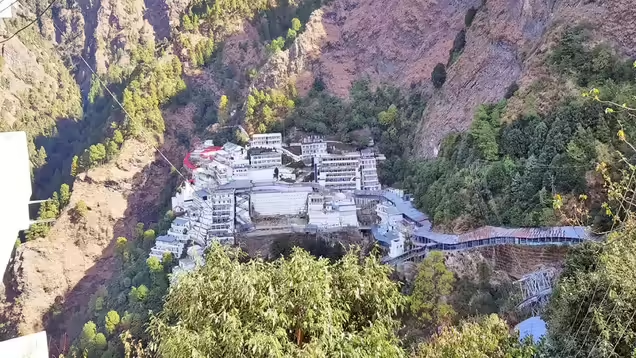
High in the Trikuta Mountains of Jammu & Kashmir, hidden within a natural cave, resides one of the most beloved forms of the Divine Mother—Maa Vaishno Devi. Every year, millions of devotees answer her silent call, walking step by step from Katra to the Bhawan, carrying faith, prayers, and hopes in their hearts.
Vaishno Devi Shakti Peeth is not just a destination—it is a journey of surrender. The climb tests patience, devotion, and endurance, yet every step feels guided, as if the Mother herself walks beside her children.
🕉️ Vaishno Devi and the Shakti Peeth Tradition
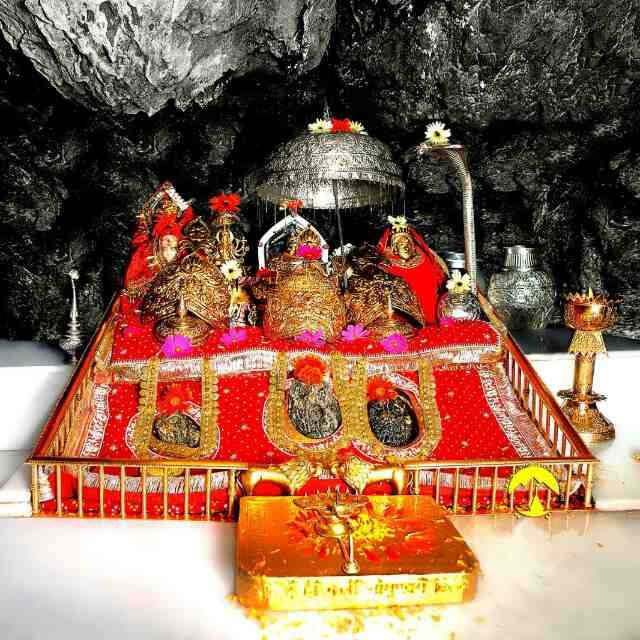
In the sacred tradition of Shakti Peethas, certain places became powerful centres of Divine Energy when the Mother’s presence sanctified the land. Vaishno Devi Bhawan is revered as one such supreme Shakti Kshetra, where the Goddess manifests not as an idol, but as living rock Pindis.
Here, the Mother is worshipped in her threefold form:
Maha Kali – strength and protection
Maha Lakshmi – prosperity and balance
Maha Saraswati – wisdom and clarity
Together, they represent the complete energy of Adi Shakti.
📖 The Sacred Legend of Maa Vaishno Devi
According to tradition, the Goddess appeared on earth as Vaishnavi, born from the combined divine energies to protect dharma. She performed intense penance in the Trikuta hills.
When pursued by Bhairon Nath, Vaishnavi retreated into the cave. There, she revealed her true cosmic form and ultimately liberated Bhairon Nath from ignorance. Repentant, he attained moksha, and devotees today complete their yatra by visiting the Bhairon Temple after darshan at the Bhawan.
This story teaches a gentle truth:
✨ Even the fiercest opposition dissolves in the presence of Divine Grace.
🕳️ The Holy Cave and the Sacred Pindis
Inside the cave shrine, devotees have darshan of three naturally formed rock Pindis, self-manifested and timeless. There are no carved images—only pure presence.
The cave itself feels womb-like, reminding pilgrims of rebirth, humility, and surrender. Many devotees say that the moment of darshan brings a deep inner silence, as if the Mother listens even before a prayer is spoken.
🚶 The Yatra: Walking with Faith
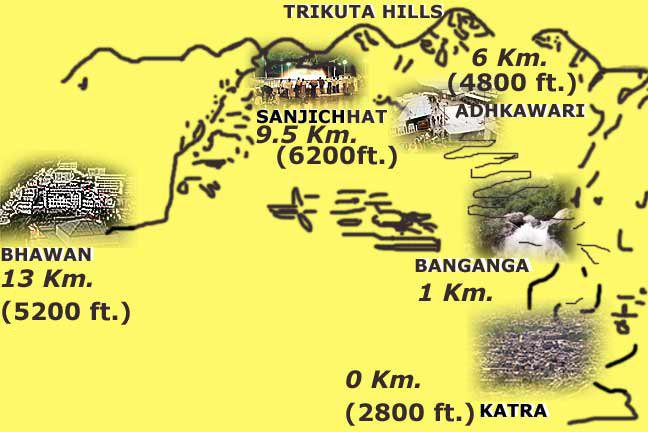
The yatra begins at Katra, the base town. From here, pilgrims walk approximately 13 km to reach the Bhawan.
Main Route:
Katra → Banganga → Charan Paduka → Adhkuwari → Himkoti / Sanjichhat → Bhawan
The path is well paved, fenced, and illuminated 24×7
Rest shelters, water points, and medical aid are available throughout
Assisted Options:
Ponies, pithoos (porters), palkis
Battery-operated vehicles (on select stretches)
Helicopter service from Katra to Sanjichhat (short walk thereafter)
The journey may be challenging, but the atmosphere—filled with chants of “Jai Mata Di”—keeps spirits high
🗓️ Best Time to Visit
March to June: Pleasant weather, peak season
October to February: Cold but spiritually calm; occasional snow
Monsoon (July–September): Lush scenery but slippery paths—extra care needed
Many devotees prefer night trekking or early mornings for a quieter, cooler experience.
🛕 Facilities at Bhawan and Along the Route
The Shri Mata Vaishno Devi Shrine Board maintains excellent facilities:
Clean dormitories and rooms (AC / Non-AC)
Free langar and bhojanalayas
Medical centres and oxygen points
Cloak rooms, lockers, ATMs
Strict security and crowd management
Everything is designed so pilgrims can focus on devotion, not logistics.
The Sacred Cave of Mata Vaishno Devi
One of the most remarkable aspects of the Vaishno Devi Shakti Peetha is the sacred cave shrine known as Bhawan, located in the Trikuta Mountains of Jammu and Kashmir.
Inside this cave, devotees do not worship a traditional idol. Instead, the goddess manifests in the form of three natural rock formations known as Pindis, representing the divine energies of:
Maha Kali
Maha Lakshmi
Maha Saraswati
These three forms symbolize strength, wealth, and wisdom. Devotees believe that visiting the Vaishno Devi cave temple and receiving darshan of the three Pindis fulfills sincere wishes and removes obstacles from life.
The Story of Bhairavnath and Vaishno Devi
According to local legend, the demon Bhairavnath pursued Goddess Vaishnavi while she was performing meditation in the Trikuta mountains.
To escape his pursuit, the goddess traveled through several sacred spots along the mountains. Finally, she entered the cave at Bhawan and revealed her divine form.
She ultimately destroyed Bhairavnath with her trident. However, before dying, Bhairavnath repented for his actions. The compassionate goddess forgave him and granted him a boon that no pilgrimage to Vaishno Devi would be considered complete without visiting the Bhairavnath Temple.
Today, devotees climb to the Bhairavnath Temple, located about 2 km above Bhawan, to complete their sacred pilgrimage.
Important Sacred Places on the Vaishno Devi Yatra Route
The journey to Vaishno Devi Shakti Peetha is itself considered a spiritual experience. Several sacred locations lie along the pilgrimage route.
Important stops include:
Banganga
This sacred stream is believed to have been created by the goddess to quench the thirst of her devotee Hanuman.
Charan Paduka
A rock believed to contain the footprints of the goddess.
Ardhkuwari Cave
This cave is where the goddess is believed to have meditated for nine months.
Bhairavnath Temple
The final destination that completes the pilgrimage.
Spiritual Symbolism of Mata Vaishno Devi
The Vaishno Devi Shakti Peetha represents the unity of the three fundamental energies of the universe.
The three Pindis symbolize:
Power (Kali)
Prosperity (Lakshmi)
Knowledge (Saraswati)
Together they represent the complete manifestation of Adi Shakti, guiding devotees toward spiritual growth and inner transformation.
Pilgrims often chant “Jai Mata Di” during the trek, expressing devotion and faith in the divine mother.
Explore Other Sacred Shakti Peethas
Devotees who visit Vaishno Devi Shakti Peetha often explore other powerful Shakti temples across India.
You may also like to read about:
For a complete guide, explore the article on 51 Shakti Peethas from North to South.
🧭 Completing the Yatra: Bhairon Temple
Traditionally, the yatra is considered complete only after visiting the Bhairon Nath Temple, located about 1.5 km above the Bhawan. A ropeway now makes this ascent easier.
This final step symbolizes forgiveness, transformation, and spiritual closure.
🌟 Conclusion: When the Mother Calls, the Path Appears
Vaishno Devi Shakti Peeth reminds us that devotion is not about ease—it is about trust.
Every tired step, every whispered prayer, every pause to breathe becomes part of the offering. When pilgrims descend from the Bhawan, they often feel lighter—not because the climb is over, but because something heavy has been left behind.
✨ The Mother does not promise a painless path—she promises her presence on it.