
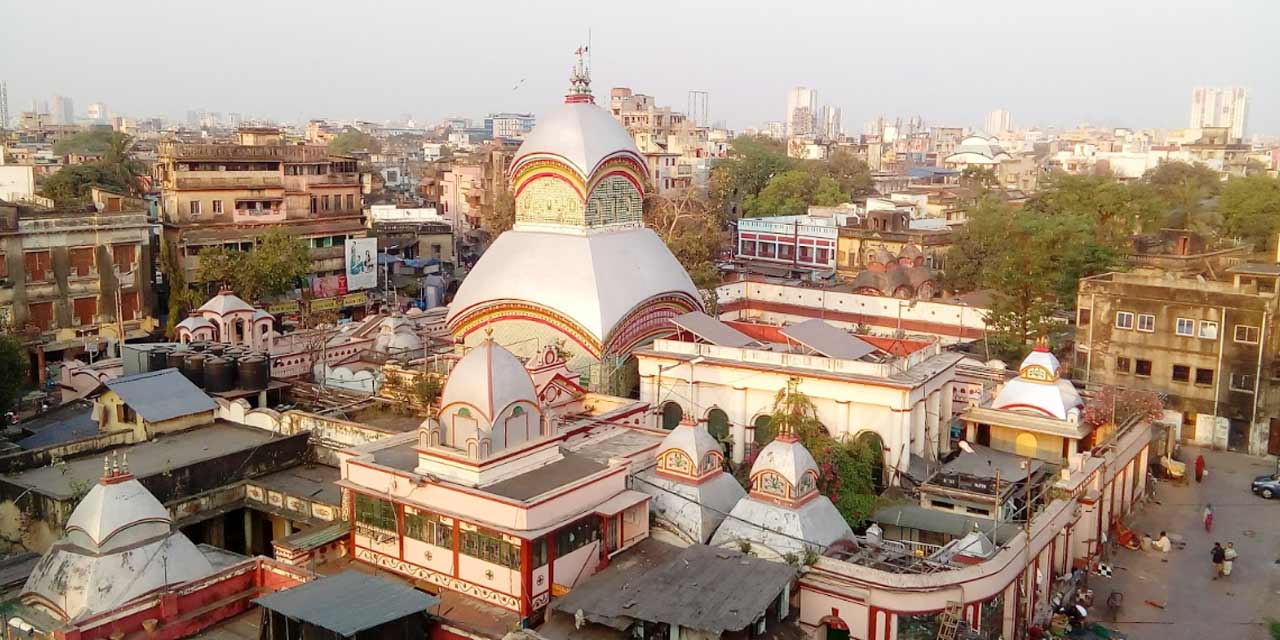
Kalighat Kali Shakti Peeth: The Living Power of Maa Bhavatarini
Kalighat Kali Temple stands as one of the most revered and spiritually vibrant Shakti Peethas in India. Located in the heart of Kolkata, West Bengal, Kalighat is widely acknowledged as one of the 51 sacred Shakti Peethas where the Divine Feminine is worshipped in her most intense and compassionate form. Here, Goddess Kali manifests as Maa Bhavatarini—the Mother who liberates devotees from fear, ignorance, and the cycle of worldly bondage.
Kalighat is not merely a temple; it is a living spiritual organism. The rhythmic chants, the scent of hibiscus flowers, the press of devotees, and the unbroken flow of rituals create an atmosphere where ancient Tantra, Bhakti, and everyday life merge seamlessly. For centuries, this sacred space has drawn kings, saints, householders, and seekers alike—each arriving with their fears, hopes, and prayers offered at the feet of the Mother.
Mythology and Sacred Significance of Kalighat
According to the ancient Shakti Peetha tradition, Goddess Sati immolated herself in the sacrificial fire of her father Daksha’s yagna after he insulted her consort, Lord Shiva. Overcome with grief, Shiva carried her lifeless body across the cosmos in a destructive Tandava. To restore balance, Lord Vishnu used his Sudarshana Chakra to dismember Sati’s body, and the places where her body parts fell became the Shakti Peethas.
Kalighat is traditionally believed to be the sacred site where the toes of Goddess Sati’s right foot fell. This event sanctified the land with immense Shakti, transforming Kalighat into a siddha kshetra—a place where prayers are believed to manifest swiftly. The Goddess here is worshipped as Bhavatarini, meaning “She who carries beings across the ocean of existence.”
The theological depth of Kalighat lies in its portrayal of Kali not merely as fierce destruction, but as supreme compassion. Her terrifying form dissolves ego and illusion, while her maternal grace offers refuge and liberation.
Iconography of Goddess Kali at Kalighat
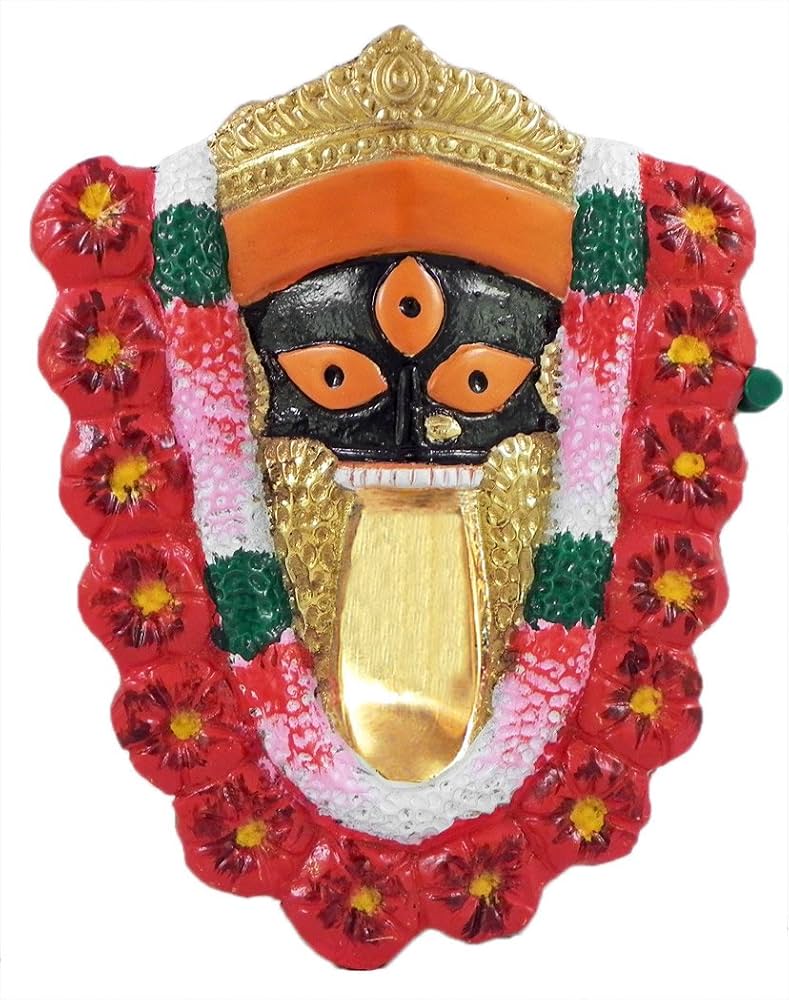
The idol of Goddess Kali at Kalighat has a unique appearance that distinguishes it from other Kali temples.
The deity is represented with:
A long golden tongue
Three large eyes symbolizing divine awareness
A garland of skulls representing the destruction of ego
Unlike many other temples, the image of the goddess is not carved from stone but crafted in a distinctive style representing Kali as the cosmic destroyer of negativity.
This powerful iconography attracts thousands of devotees every day.
Historical Evolution of Kalighat Kali Temple
The sacredness of Kalighat predates recorded history, but archaeological and literary evidence suggests continuous worship since at least the Gupta period. The region once lay along the banks of the Adi Ganga, an ancient course of the Ganges, making it an important riverine pilgrimage center.
Early shrines at Kalighat were likely simple structures. Historical records indicate that a temple existed here by the 16th century, possibly rebuilt under the patronage of Raja Man Singh. The present temple structure, however, dates to 1809 CE, constructed under the supervision of the Sabarna Roy Chowdhury family of Barisha.
Over time, Kalighat grew into a major religious nucleus of Bengal. The temple also became deeply woven into Kolkata’s cultural life, inspiring devotional music, poetry, and the famous Kalighat Pat paintings—a folk art tradition that blended religious imagery with social commentary during the colonial era.
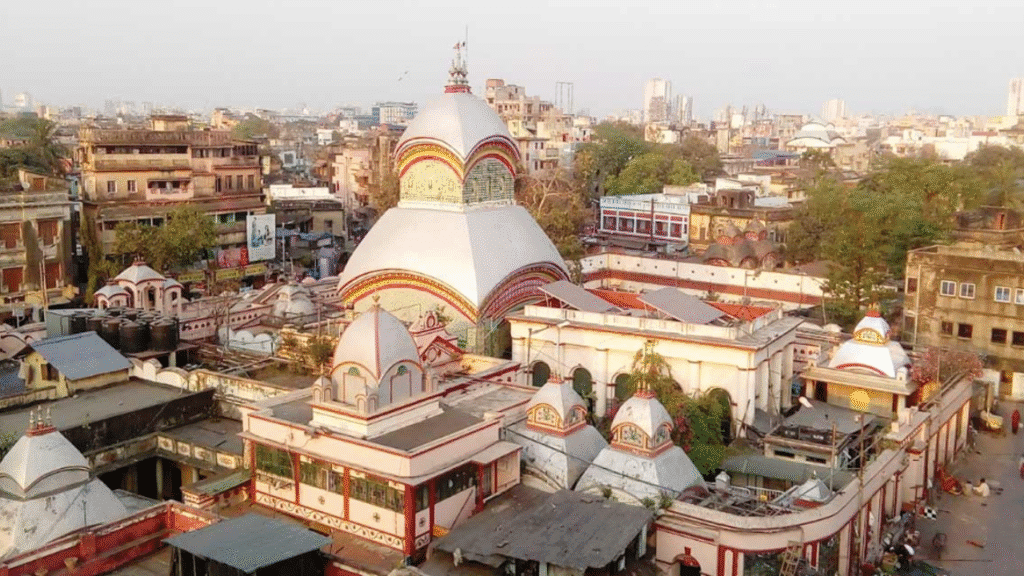
Architecture and Iconography of Kalighat Kali Shakti Peeth
Kalighat’s architecture follows the traditional Bengal chala style, distinct from the towering shikharas of North India. The sanctum is compact, creating an intense and intimate darshan experience where the devotee stands face-to-face with the Goddess.
The presiding deity is a self-manifested black stone image of Dakshina Kali, unlike conventional idols. The face alone is carved, featuring three large expressive eyes. The rest of the body is symbolic rather than sculpted. The Goddess has four arms, a long golden tongue, and is adorned with gold and silver ornaments, including a radiant garland. Her feet rest upon the chest of Shiva, representing cosmic balance.
Within the temple complex are several subsidiary shrines, including those dedicated to Shiva as Nakuleshwar Mahadev, Radha-Krishna, and other deities, reflecting the inclusive spiritual ecosystem of Kalighat.
Kalighat Kali as a Sacred Shakti Peetha
The Kalighat Kali Temple in Kolkata is revered as one of the most powerful Shakti Peethas in India. According to ancient tradition, this sacred site marks the place where the toes of Goddess Sati fell when Lord Vishnu dismembered her body with the Sudarshana Chakra.
Because of this divine association, Kalighat became an important center of Shakti worship in eastern India. Devotees believe that the goddess here fulfills sincere prayers and protects her devotees from evil forces.
The temple is dedicated to Goddess Kali, one of the most powerful forms of Adi Shakti.
Rituals, Festivals, and Tantric Traditions
Kalighat has long been a major center of Tantric Shakti worship, especially within the Kaula and Vamachara traditions. Daily worship follows a strict ritual rhythm, beginning with Mangala Aarti at dawn, followed by multiple bhog offerings, afternoon puja, and evening aarti.
Devotees offer red hibiscus flowers, sweets, rice, saris, and vermilion. The hibiscus is especially sacred to Kali and symbolizes life force and devotion. Special nights such as Amavasya (new moon) are considered extremely powerful for sadhana.
The most important festival here is Kali Puja, celebrated on the night of Diwali, when the entire temple glows with lamps and extended rituals. Durga Puja and Navaratri are also observed with special homas and scriptural recitations. Throughout the year, the temple resonates with mantra japa, yantra worship, and heartfelt prayers offered by millions.
Pilgrimage Experience at Kalighat Kali Temple
A visit to Kalighat is intense, emotional, and deeply moving. Darshan lines can be long, especially on Tuesdays, Saturdays, Amavasya days, and during festivals. Early mornings are generally the calmest.
Traditional temple guides, known as pandas, assist devotees with rituals and offerings. While their guidance can be helpful, pilgrims are advised to clarify costs beforehand and proceed mindfully.
Prasadam in the form of sweets and khichuri is distributed on special occasions, and the surrounding streets are filled with stalls selling puja items, flowers, and devotional art.
Daily Rituals at Kalighat Kali Temple
The temple follows traditional Shakta rituals dedicated to Goddess Kali.
Important rituals include:
Morning mangala aarti
Bhog offerings to the goddess
Evening aarti with devotional chanting
Special offerings such as flowers, sweets, and red hibiscus are commonly presented to the goddess.
The temple becomes especially vibrant during Kali Puja and Navaratri festivals.
Location, How to Reach, and Best Time to Visit
Kalighat Kali Temple is located in South Kolkata near the Adi Ganga canal. The nearest metro stations are Kalighat and Jatin Das Park, both within walking distance. Kolkata’s extensive network of buses, autos, and taxis makes access easy from any part of the city.
The best time to visit is October to February, when the weather is pleasant. Summers can be hot and humid, while monsoons bring heavy rains. Festival days are spiritually vibrant but crowded, requiring patience and planning.
Nearby Sacred Sites and Cultural Landmarks
Many pilgrims extend their visit to other sacred places in Kolkata. Dakshineswar Kali Temple, associated with Sri Ramakrishna Paramahamsa, is a popular complementary pilgrimage. Cultural landmarks such as Victoria Memorial, Maidan, College Street, and the Indian Museum offer a broader experience of Kolkata’s spiritual and intellectual heritage.
The narrow lanes near Kalighat are also home to artists who continue the tradition of Kalighat Pat painting, preserving a unique blend of devotion and folk expression.
Spiritual Meaning of Kali Worship at Kalighat
The power of Kalighat lies in its paradox. Kali appears fierce, even terrifying, yet her essence is unconditional love. She destroys ignorance, ego, and fear so that truth may arise. Devotees often describe a direct, visceral connection here—a feeling that the Mother listens without distance.
The simple mantra “Om Krim Kalikayai Namah” captures the spirit of Kalighat: transformation through surrender. Even a silent prayer offered with sincerity is believed to reach the Goddess instantly in this sacred space.
Tantric Traditions of Kalighat
The Kalighat Kali Shakti Peetha has historically been associated with Tantric worship traditions.
Tantric practitioners consider the temple a powerful center of spiritual energy where the goddess manifests as the ultimate cosmic force.
Many spiritual seekers and saints have visited Kalighat to meditate and perform rituals dedicated to the divine feminine energy.
Explore Other Sacred Shakti Peethas
Devotees visiting Kalighat Kali Shakti Peetha often explore other sacred temples dedicated to the divine mother.
You may also like to read about:
For a complete pilgrimage guide, explore 51 Shakti Peethas from North to South.
Final Reflections on Kalighat Kali Shakti Peeth
Kalighat is not a monument frozen in time; it is a breathing center of Shakti. Amid the noise of the city and the rush of modern life, the Goddess stands timeless—fierce, compassionate, and ever-present. To visit Kalighat is to encounter the raw heartbeat of devotion, where fear dissolves and faith takes form.
For pilgrims, seekers, and travelers alike, Kalighat Kali Shakti Peeth offers not just blessings, but a profound reminder: the Divine Mother is never distant—she stands waiting, right where the heart dares to bow.

Yo, just signed up with luckykingvip and I’m digging it. Good selection of games, the bonuses are actually pretty sweet, and haven’t had any issues cashing out. Give it a shot! luckykingvip