

Ugratara Shakti Peeth: The Fierce Guardian Goddess of Guwahati
Ugratara Devalaya, revered as Ugratara Shakti Peeth, is one of the most powerful and spiritually intense shrines of the Divine Mother in Assam. Situated near the tranquil Jor Pukhuri tanks in Uzan Bazaar, Guwahati, this ancient temple honors Goddess Ugratara, a fierce and protective manifestation of Shakti. Unlike grand hilltop temples, Ugratara Shakti Peeth stands quietly within the city, radiating an inward, concentrated energy that devotees often describe as deeply transformative.
This sacred shrine is associated with the ancient Shakti Peetha tradition, which marks locations sanctified by the fall of Goddess Sati’s body parts during Lord Shiva’s cosmic dance of grief. Ugratara Shakti Peeth is especially revered by Tantric practitioners, sadhakas, and household devotees who seek protection, courage, and inner strength.
Mythology and Sacred Significance of Ugratara Shakti Peeth
According to Shakta tradition, after Goddess Sati immolated herself at her father Daksha’s yagna, Lord Shiva wandered the universe carrying her lifeless body. To restore cosmic balance, Lord Vishnu dismembered Sati’s body with his Sudarshana Chakra, and the places where her body parts fell became the Shakti Peethas.
At Ugratara Shakti Peeth, it is widely believed that the navel (nabhi) of Goddess Sati fell, making this site a potent center of creation energy and fierce protection. The navel symbolizes life force and sustenance, which aligns with Goddess Ugratara’s role as a guardian who fiercely shields devotees from harm while guiding them through inner transformation.
Unlike many temples, the Goddess here is not worshipped in a human-like idol form. Instead, a sacred yantra and a water-filled symbolic pit represent the living presence of Shakti, emphasizing the esoteric and Tantric nature of the shrine.
Historical Background and Ahom Patronage
The present structure of Ugratara Devalaya is commonly attributed to the Ahom King Shiva Singha (Siva Singha), who is believed to have built or renovated the temple around 1725 CE. The temple suffered damage during earthquakes and natural calamities over the centuries and was subsequently restored multiple times by local rulers, devotees, and temple authorities.
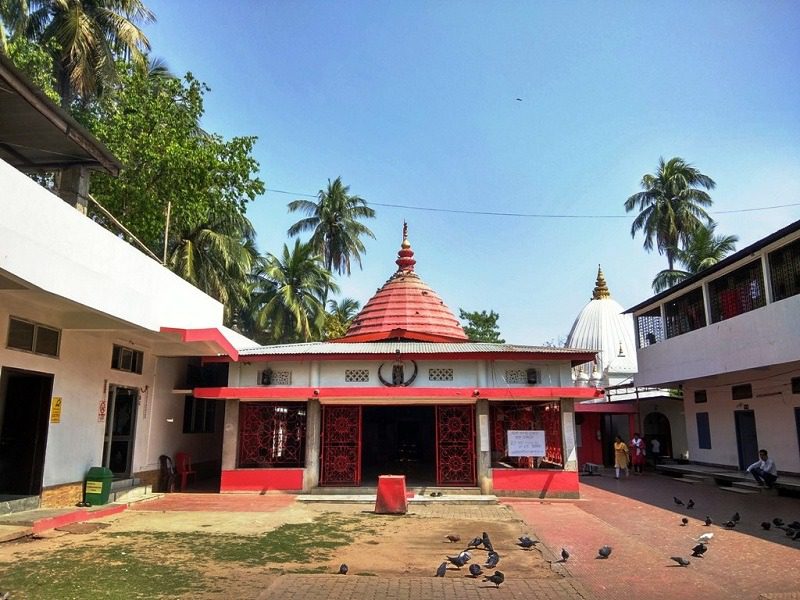
The Ahom influence is evident in the temple’s sloping roof style and restrained architectural form. Despite its modest appearance, the spiritual continuity of Ugratara Shakti Peeth has remained unbroken, making it one of the most enduring centers of Shakti worship in Assam.
Architecture, Layout, and Unique Features
Ugratara Shakti Peeth is architecturally simple yet spiritually intense. The sanctum is compact, creating a powerful inward focus during darshan. The absence of an anthropomorphic idol directs the devotee’s attention toward pure energy rather than form, a hallmark of Tantric Shakti worship.
The temple complex includes:
The main sanctum housing the sacred yantra
A shrine dedicated to Lord Shiva, revered here as Bhayananda
Smaller shrines for Ganesha and other associated deities
The nearby Jor Pukhuri twin tanks, which enhance the contemplative atmosphere
This Shakta–Shaiva harmony reflects Assam’s long-standing spiritual syncretism.
Rituals, Festivals, and Tantric Worship
Daily worship at Ugratara Shakti Peeth includes offerings of flowers, vermillion, incense, mustard oil lamps, and traditional naivedya. Fridays and Amavasya (new moon days) are considered especially powerful for Shakti worship and draw larger crowds.
Major festivals include Navaratri and Durga Puja, during which the temple becomes vibrant with rituals, chanting, and Tantric observances. Historically, animal sacrifice—especially goats—was associated with the temple as part of fierce Shakti rituals. In recent years, many devotees choose symbolic offerings instead, reflecting evolving devotional practices.
The temple is particularly revered by Tantric sadhakas, who believe Ugratara grants protection, fearlessness, and spiritual awakening.
Pilgrim Experience and Visiting Tips
A visit to Ugratara Shakti Peeth is calm yet intense. Morning hours are ideal for darshan and aarti. The atmosphere is quieter compared to larger pilgrimage sites, allowing for introspection and silent prayer.
Devotees are advised to dress modestly and respect ritual boundaries, as certain inner areas may be restricted during special rites. Photography near the sanctum is usually discouraged.
Location, How to Reach, and Best Time to Visit
Ugratara Shakti Peeth is located in Uzan Bazaar, near Jor Pukhuri, in central Guwahati. It is approximately 1.5 km from Guwahati Railway Station and easily accessible by auto-rickshaws, city buses, and app-based cabs. Parking is limited, so walking the final stretch is recommended.
The best time to visit is October to March, when the weather is pleasant. Summers can be humid, and monsoon months bring heavy rainfall.
Nearby Sacred and Cultural Sites
Pilgrims often combine their visit to Ugratara Shakti Peeth with nearby sacred landmarks such as:
Umananda Temple on the Brahmaputra
Navagraha Temple on Chitrachal Hill
Assam State Museum and Dighalipukhuri for cultural exploration
Together, these sites form a spiritually rich circuit within Guwahati.
Spiritual Meaning of Goddess Ugratara
Goddess Ugratara represents fierce compassion—a Mother who removes obstacles through intensity and protection rather than gentleness alone. Her worship reminds devotees that transformation often arises through courage, discipline, and surrender.
For many seekers, Ugratara Shakti Peeth offers a deeply grounding experience, helping them confront fears and emerge with renewed inner strength.
Final Reflection
Ugratara Shakti Peeth may not be grand in size, but it is immense in spiritual depth. Amid the bustle of Guwahati, this sacred space stands as a silent guardian of ancient wisdom. To step into Ugratara Devalaya is to encounter Shakti in her raw, protective form—guiding, guarding, and transforming all who approach her with sincerity.