
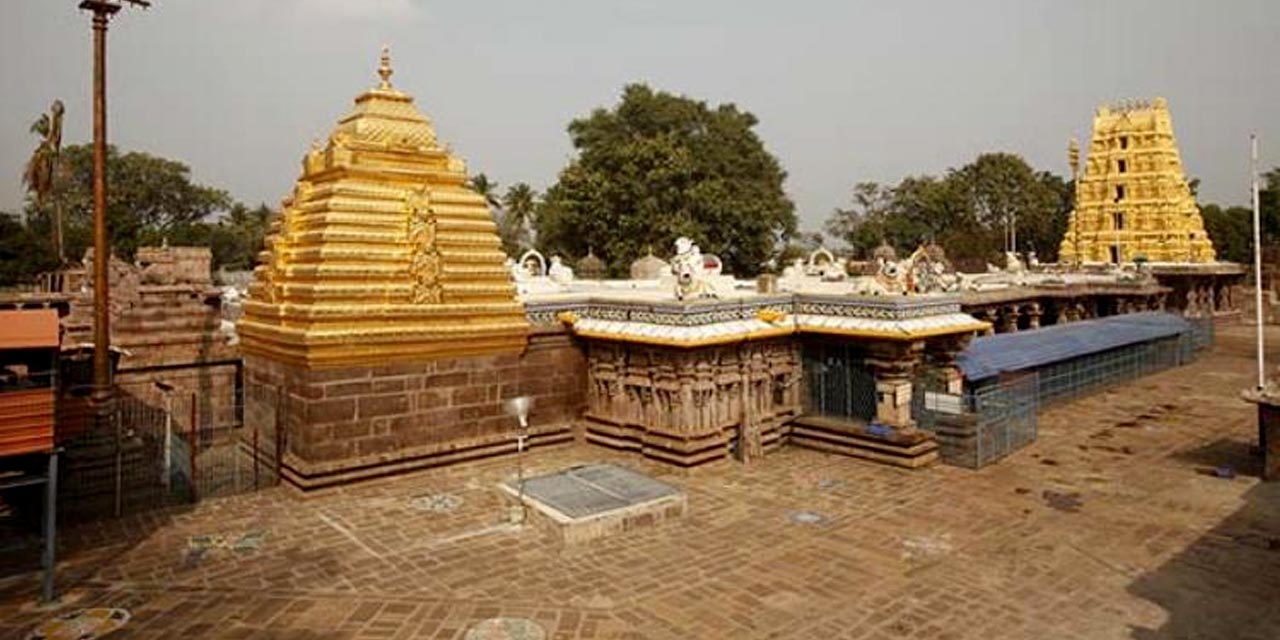
Bhramaramba Devi Shakti Peeth at Srisailam
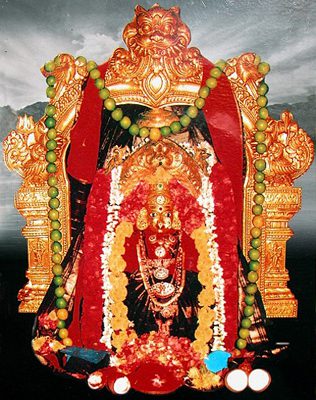
Bhramaramba Devi Shakti Peeth, located within the sacred Srisailam temple complex in Andhra Pradesh, is one of the most unique pilgrimage destinations in India. Here, a Maha Shakti Peeth and a Jyotirlinga coexist—Goddess Bhramarambika Devi and Lord Mallikarjuna—symbolizing the eternal unity of Shakti and Shiva.
Nestled in the Nallamala Hills along the banks of the Krishna River, this shrine marks a major southern transition point in the Shakti Peetha pilgrimage journey.
Mythological Significance of Bhramaramba Shakti Peeth Srisailam
According to Shakta tradition, Bhramaramba Shakti Peeth Srisailam is the sacred site where the neck (greeva) of Goddess Sati fell after her body was dismembered by Lord Vishnu’s Sudarshana Chakra to pacify Shiva’s cosmic grief following the Daksha Yajna.
The Goddess here is worshipped as Bhramarambika, meaning “Mother of Bees.” A powerful legend narrates how Devi manifested as Bhramari, releasing six-legged bees to destroy the demon Arunasura, who was immune to death by humans or animals. This story establishes the temple as a place of fierce protection and spiritual transformation.
Why Srisailam Is a Rare Maha Shakti Peeth
Among all Shakti Peeths in Andhra Pradesh, Srisailam is exceptional because:
It is one of the 18 Maha Shakti Peethas
It houses both a Shakti Peeth and a Jyotirlinga
It follows Pañcāyatana worship, integrating Shaiva and Shakta paths
This sacred pairing is comparable only to places like Kalighat, where Shiva–Shakti unity is ritually emphasized.
Temple Architecture and Sacred Layout
The Mallikarjuna Bhramaramba Temple complex is vast yet spiritually intimate.
Key Shrines
Mallikarjuna Swamy – Jyotirlinga of Lord Shiva
Bhramaramba Devi – Maha Shakti Peeth (compact sanctum)
Ardhanareeshwara Shrine
Veerabhadra & Navagraha shrines
Inside the Devi sanctum, devotees can hear a gentle humming sound, believed to represent the eternal presence of divine bees protecting the Goddess.
Rituals and Daily Worship at Bhramarambika Devi Temple
Daily worship at the Bhramarambika Devi Temple follows ancient Agamic traditions:
Suprabhata Seva (early morning awakening)
Abhishekam to Mallikarjuna Swamy
Kumkumarchana to Bhramaramba Devi
Sandhya Aarti with lamps and conch sounds
Special sevas are in high demand during Navaratri, Maha Shivaratri, and Karthika Masam.
Festivals and Spiritual Energy of Srisailam Shakti Peeth
Major celebrations at the Srisailam Shakti Peeth include:
Maha Shivaratri – night-long Shiva–Shakti worship
Sharad & Chaitra Navaratri – Devi-centric rituals
Karthika Deepotsavam – lamp offerings across the hills
Pilgrims often combine this visit with Jogulamba, creating a powerful southern Shakti circuit.
Pilgrim Guide: Darshan Flow and Practical Tips
Best Darshan Flow
Begin with Mallikarjuna Swamy Abhishekam
Proceed to Bhramaramba Devi darshan
Book Kumkumarchana in advance on festival days
Dress Code
Modest traditional attire recommended
Separate shawl for Devi darshan helps at checkpoints
Pro Tip: Early morning darshan significantly reduces waiting time.
How to Reach Bhramaramba Devi Shakti Peeth
Air: Hyderabad (215–230 km)
Rail: Markapur Road, Kurnool Town
Road: Scenic forest ghat road via NH 765
Night travel restrictions may apply through the Nallamala forest—carry ID proof.
Nearby Sacred Sites Around Srisailam
Enhance your pilgrimage by visiting:
Sakshi Ganapati – registers your yatra
Pathala Ganga – Krishna River access
Akkamahadevi Caves – sacred limestone caves
Shikhareswara Swamy – hilltop darshan
Spiritual Significance of Bhramaramba Devi
Bhramaramba Devi of Srisailam is worshipped as a powerful and compassionate form of Divine Mother Shakti. Devotees believe that her presence protects them from fear, negativity, and inner turmoil. The name “Bhramaramba” is connected with the bee form of the Goddess, symbolizing her ability to destroy evil forces and guide devotees toward truth and righteousness. Worship at this sacred Shakti Peeth is said to grant courage, clarity of mind, and emotional strength.
This holy shrine is uniquely blessed because it stands beside the Mallikarjuna Jyotirlinga, representing the eternal union of Shiva and Shakti. Pilgrims feel that praying here brings harmony in family life, removes obstacles in career and education, and gives peace to those suffering from worries or uncertainty. Many devotees visit Srisailam during Navaratri and Maha Shivaratri to experience the divine energy that is believed to be especially strong during these sacred days.
Beyond material wishes, Bhramaramba Devi inspires spiritual growth. Devotees pray for wisdom, devotion, and inner stability. The peaceful hills of Srisailam, the flowing Krishna River, and the temple’s ancient vibrations create a deep sense of surrender and faith. Visiting this Shakti Peeth reminds devotees that the Divine Mother is always protecting, guiding, and blessing those who approach her with sincerity and devotion.
Why Bhramaramba Devi Shakti Peeth Is Spiritually Unique
The Bhramaramba Devi Shakti Peeth represents silent strength—a Goddess who protects relentlessly yet remains inwardly calm. The bee symbolism reminds devotees that even the smallest force, guided by divine will, can dissolve great negativity.
Quick Facts
Temple Name: Bhramaramba Devi Shakti Peeth
Location: Srisailam, Andhra Pradesh
Body Part Fallen: Neck (according to legend)
Consort: Mallikarjuna Jyotirlinga
Best Time: Oct–March
Festival: Maha Shivaratri, Navaratri
How to Reach
• Airport: Hyderabad
• Railway: Markapur Road
• Bus: APSRTC from Hyderabad & Vijayawada
FAQ
1. Which body part of Goddess Sati fell here?
The neck of Goddess Sati is believed to have fallen at Srisailam, making it a sacred Shakti Peeth.2. Is this also a Jyotirlinga temple?
Yes. Bhramaramba Devi Temple is inside the Mallikarjuna Jyotirlinga Temple complex at Srisailam.3. What is the best time to visit Srisailam?
The best time is October to March. Maha Shivaratri and Navaratri are very special here.4. What nearby temples can be visited?
Mallikarjuna Jyotirlinga, Sakshi Ganapati, Pathala Ganga, Shikaresvara, and Hatakesvara temples.
Nearby Shakti Peethas to Explore
While visiting Bhramaramba Devi Shakti Peeth at Srisailam, devotees may also explore these nearby sacred Shakti Peethas:
• Jogulamba Shakti Peeth – Alampur, Telangana
• Kamakshi Devi Shakti Peeth – Kanchipuram, Tamil Nadu
• Chamundeshwari Shakti Peeth – Mysuru, Karnataka
• Mahalakshmi Shakti Peeth – Kolhapur, Maharashtra
• Renuka Devi Shakti Peeth – Mahur, MaharashtraThese temples form part of the divine Shakti Peetha pilgrimage across South India.
A Gentle Devotional Reflection
In the quiet corridors of Srisailam, where forest winds meet temple bells, Bhramaramba Devi speaks softly. She does not roar—she hums. And in that hum lies courage, protection, and the reassurance that Shakti always stands guard.