
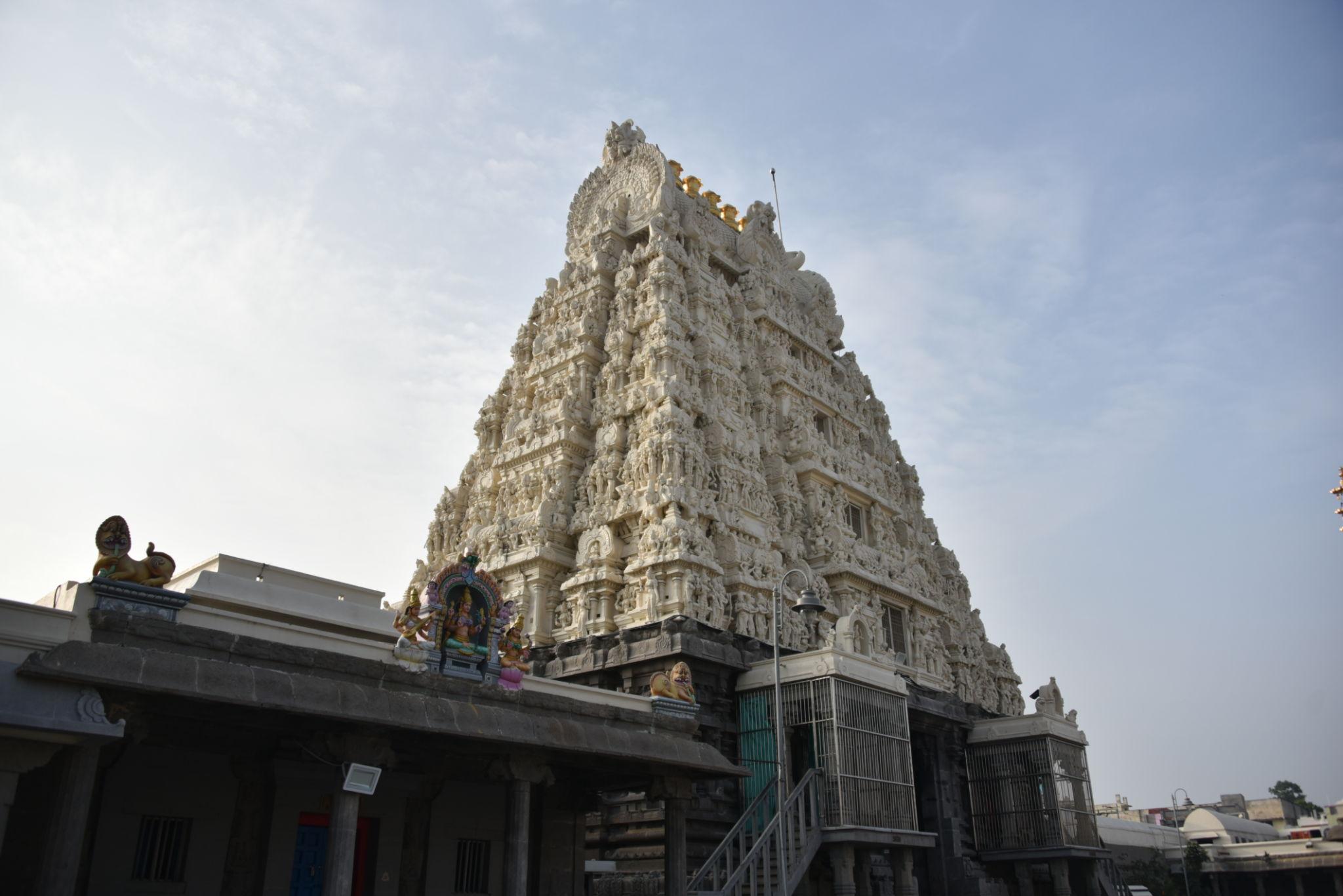
Kanchi Kamakshi Shakti Peetha – The Sacred Nabhi of Adi Parashakti
The Kanchi Kamakshi Shakti Peetha stands at the luminous heart of Kanchipuram, Tamil Nadu—one of India’s most ancient temple cities. Revered as a supreme seat of Adi Parashakti, this sacred shrine embodies both classical Shakta theology and living devotion.
In Shakti Peetha traditions, Kanchipuram is venerated as the site where Sati’s Nabhi (navel) fell—symbolizing the cosmic center of creation and sustenance. As such, the Kamakshi Amman Temple is not merely a pilgrimage site—it is a metaphysical axis of Shakti worship in South India.
Mythological Origin – The Nabhi of Sati
According to Devi Purana traditions, after Sati’s self-immolation, Lord Shiva wandered in grief with her body. To calm the cosmic disturbance, Lord Vishnu dismembered the body with the Sudarshana Chakra.
At Kanchipuram, her navel (nabhi) is believed to have fallen—marking it as a Nabhi Shakti Peetha.
The navel symbolizes:
Source of life
Creative power
Sustenance of the cosmos
Thus, the Kanchi Kamakshi Shakti Peetha represents the generative center of divine consciousness.
Goddess Kamakshi – Lalita Tripurasundari
Kamakshi is worshipped as Lalita Tripurasundari, the supreme form of beauty and wisdom in Srividya Tantra.
Iconography Highlights:
Seated in Padmasana
Holds sugarcane bow and flower arrows
Flanked by Pasha (noose) and Ankusha (goad)
Radiates serene, yogic composure
Unlike many fierce Devi forms, Kamakshi appears calm and inward—symbolizing mastery over desire rather than its destruction.
Adi Shankaracharya and the Sri Chakra
A defining moment in the temple’s spiritual history is the installation of the Sri Chakra in the sanctum by Adi Shankaracharya.
Adi Shankaracharya is believed to have consecrated the Sri Yantra to harmonize the goddess’s intense energy and formalize Srividya worship practices.
The Sri Chakra:
Is worshipped before the main idol
Forms the geometric blueprint of the temple
Anchors tantric rituals like Navavarana Puja
This connection makes Kanchi Kamakshi Shakti Peetha one of the most important Sri Vidya centers in India.
Historical Development of Kamakshi Temple
Pallava Era (5th–8th century CE): Early sanctity foundations
Chola Period: Structural additions
Vijayanagara & Nayaka Period: Major expansions and mandapams
18th Century Renovations: Structural stabilization
Modern Management: Tamil Nadu HR&CE administration
Kanchipuram flourished as a capital of Shaiva, Vaishnava, and Shakta traditions simultaneously.
Architectural Features
Gayatri Mandapam
Gayatri Mandapam
Features 24 pillars symbolizing the 24 syllables of the Gayatri Mantra.Golden Vimana
The sanctum’s gold-plated superstructure signifies divine radiance.
Temple Tank & Mango Tree
Legends narrate Kamakshi performing penance under a sacred mango tree while worshipping a sand lingam.
Rituals and Daily Worship
Daily worship includes:
Suprabhata Seva
Sri Chakra Puja
Kumkumarchana
Sahasranama recitation
Deepa Aradhana
Fridays are especially significant for Devi worship.
Full moon nights feature Navavarana Puja, central to Srividya Tantra.
Festivals at Kanchi Kamakshi Shakti Peetha
Navaratri Brahmotsavam
Nine nights celebrating different aspects of the Goddess.
Aadi Fridays
Highly auspicious for Shakti devotees.
Panguni Uthiram
Celebrates divine union.
The temple becomes a vibrant center of devotional music, Vedic chants, and classical arts.
Theology of the Shakti Peetha
While traditions vary in enumeration (51, 64, 108 Peethas), Kanchi is widely acknowledged among the 18 Ashtadasa Shakti Peethas.
Its theological essence:
Shakti as compassion
Shakti as inner geometry (Sri Chakra)
Shakti as liberation (moksha)
How to Visit
📍 Location: Kanchipuram, Tamil Nadu
🚗 75 km from Chennai
✈️ Nearest Airport: Chennai InternationalBest time: October–February
Dress modestly; photography restricted inside sanctum.
Internal Shakti Peetha Circuit
You can combine your pilgrimage with:
Madurai Meenakshi Shakti Peetha
And explore the full 51 Shakti Peethas of India journey.
FAQs
Is Kanchi Kamakshi a Shakti Peetha?
Yes. It is associated with Sati’s Nabhi and revered among the Ashtadasa Shakti Peethas.
Who installed the Sri Chakra?
Tradition attributes it to Adi Shankaracharya.
What is special about Kamakshi?
She is worshipped in yogic seated posture, symbolizing inner mastery rather than outward ferocity.
What is the best day to visit?
Fridays and Navaratri are most auspicious.
Final Reflection
At the Kanchi Kamakshi Shakti Peetha, devotion feels centered—not dramatic, but luminous. The Nabhi of the Goddess reminds us that all creation begins from stillness.
Sit quietly. Watch the lamp flicker. Let the geometry of grace unfold within.

1 thought on “Kanchi Kamakshi Shakti Peetha: The Sacred Nabhi of Adi Parashakti in Tamil Nadu”