
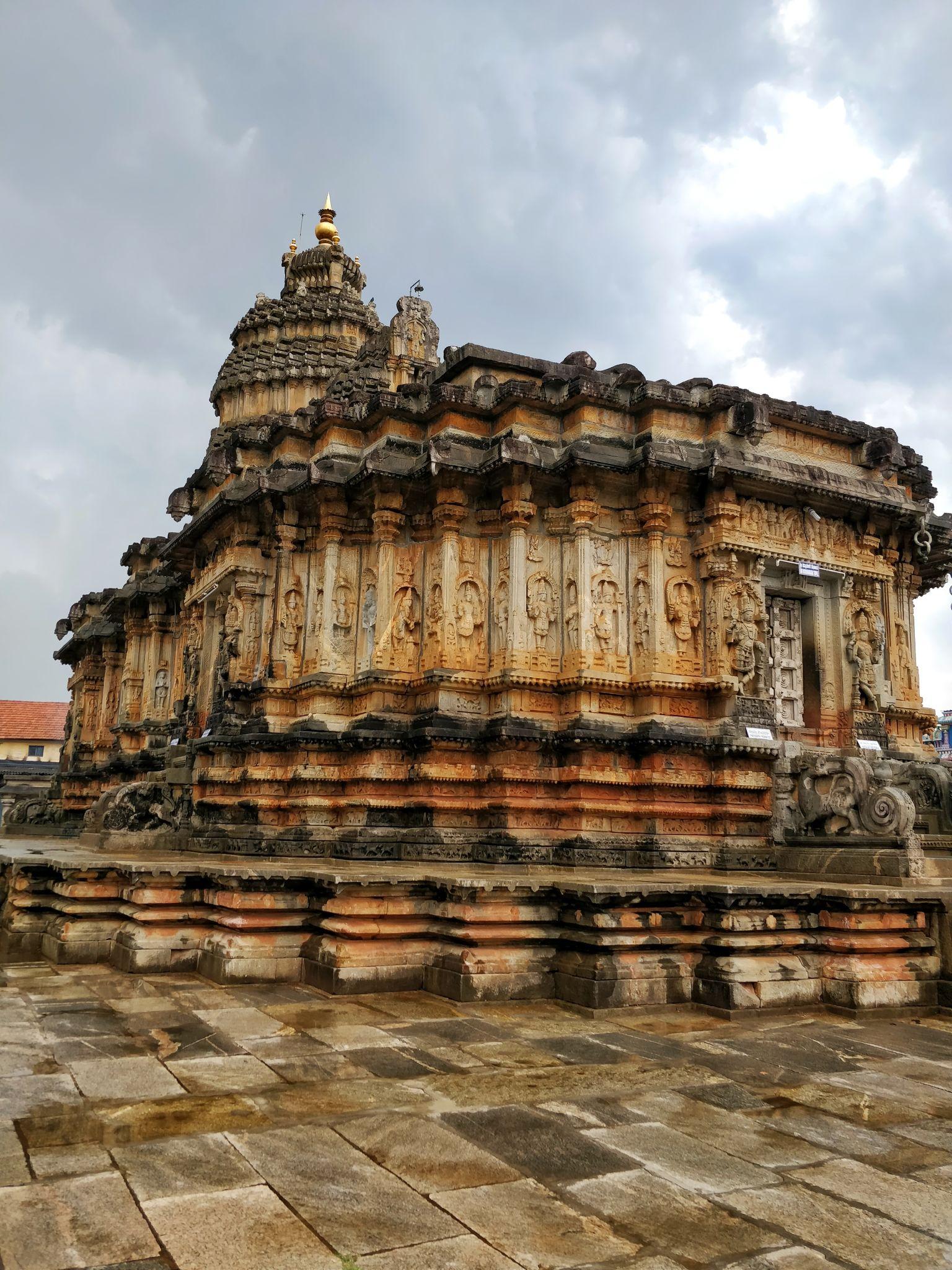
Sringeri Sharadamba Shakti Peetha – The Southern Seat of Divine Knowledge
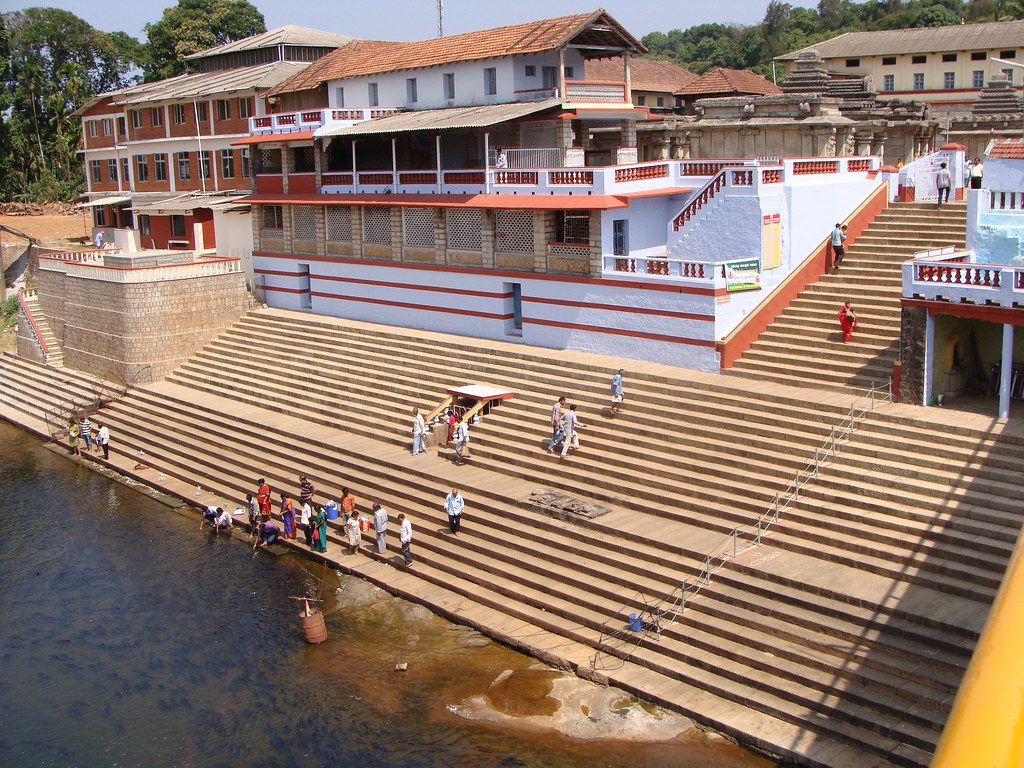
The Sringeri Sharadamba Shakti Peetha, located in Karnataka’s lush Western Ghats, stands as one of the most revered centers of spiritual learning in India. Situated on the serene banks of the Tunga River, this sacred shrine embodies Goddess Sharadamba, a radiant form of Saraswati — the Goddess of wisdom, arts, and learning.
Unlike many Shakti Peethas linked directly to Sati’s dismemberment lore, Sringeri is celebrated as a Vidya Shakti Peetha — where divine feminine energy manifests as knowledge itself.
The Vision of Adi Shankaracharya
Adi Shankaracharya founded the Dakshinamnaya Sringeri Sharada Peetham in the 8th century CE.
Legend narrates that Shankara witnessed a cobra spreading its hood to protect a pregnant frog from the harsh sun by the Tunga River. Seeing harmony between natural enemies, he recognized the land as spiritually charged and established his first Advaita Vedanta matha here.
He installed a sandalwood idol of Goddess Sharadamba over a sacred Sri Chakra carved into rock — thus consecrating Sringeri as a beacon of non-dual philosophy.
Historical Evolution of Sringeri Sharadamba Temple
8th–9th Century: Founding of the Peetham
Hoysala Period: Architectural patronage
Vijayanagara Era: Major structural development
14th Century: Vidyaranya’s influence in shaping Vijayanagara Empire
20th Century: Granite reconstruction and installation of the golden idol
The present golden idol of Sharadamba replaced the original sandalwood icon under later pontiffs, ensuring longevity while preserving spiritual continuity.
Sharadamba – The Goddess of Wisdom
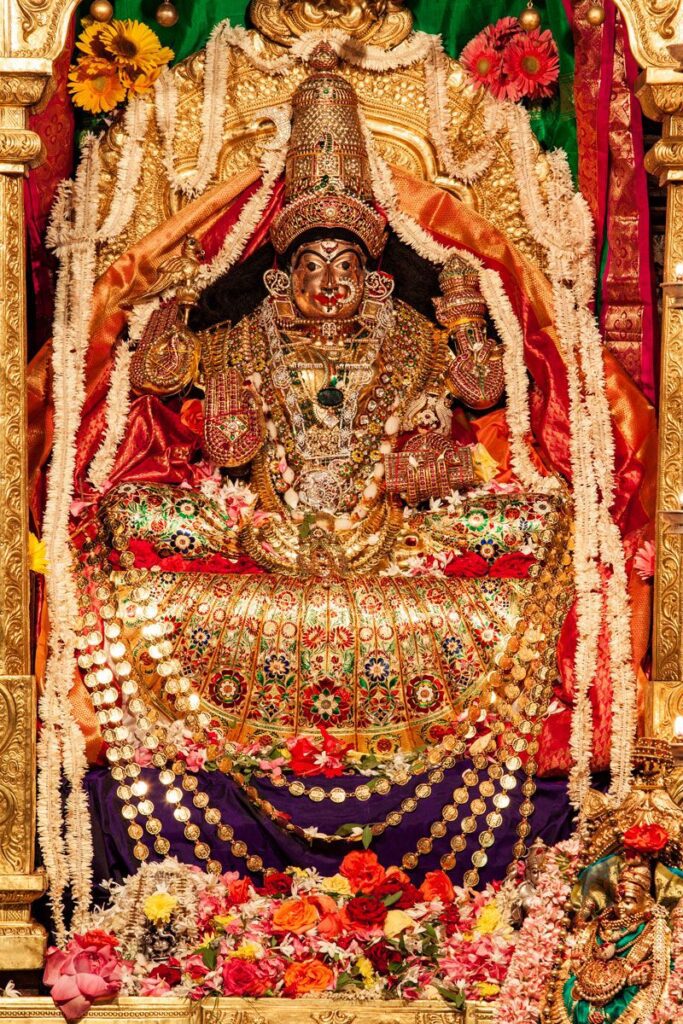
The presiding deity is seated in a graceful posture, holding:
Rosary (symbol of meditation)
Scriptures (knowledge)
Veena (arts and music)
Gesture of blessing (grace)
She represents Saraswati not merely as academic knowledge, but as inner illumination.
Temple Architecture
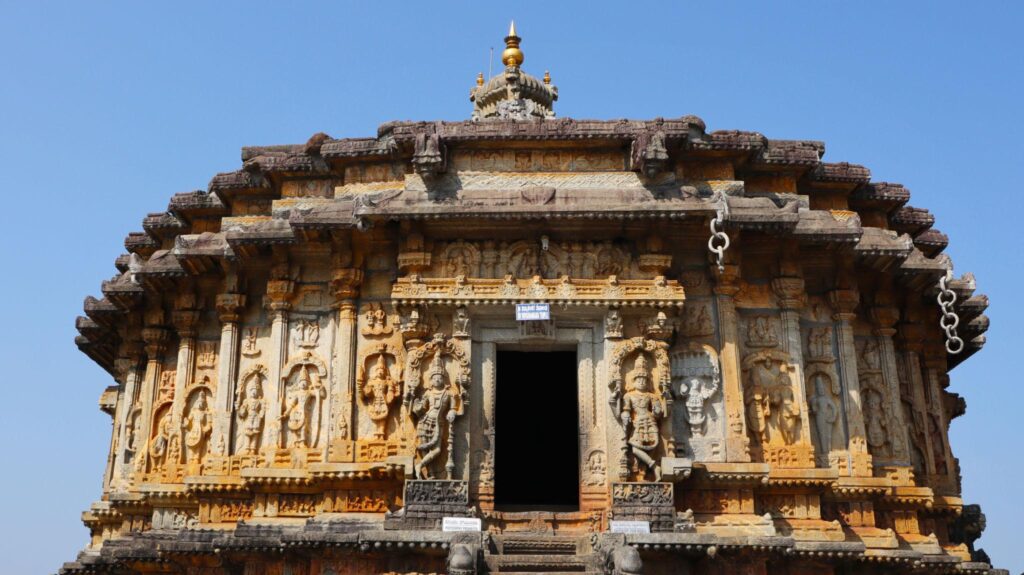
The Sringeri Sharadamba Temple blends Kerala-style roofing with polished granite walls added in the 20th century.
Key Highlights:
Ornate Mahamandapam
Sculpted pillars depicting Durga and Rajarajeshwari
Sri Chakra foundation
Adjacent shrines to Torana Ganapathy and Adi Shankaracharya
Nearby stands the architectural marvel:
Vidyashankara Temple
Famous for:
Zodiac-aligned pillars
Hoysala-Vijayanagara hybrid style
Astronomical precision
Ritual Life at Sringeri
Daily rituals include:
Abhishekam
Alankaram
Sahasranama chanting
Deepa Aradhana
Fridays and Navaratri draw special crowds.
Aksharabhyasa Ceremony
A unique ritual where children begin their educational journey under the Goddess’s blessings.
Navaratri at Sringeri
Navaratri is the grandest festival at Sringeri Sharadamba Shakti Peetha.
Highlights:
Chariot processions
Classical music concerts
Veda Parayana
Special alankarams for nine nights
The spiritual atmosphere during Sharannavaratri is deeply transformative.
The Sringeri Sharada Peetham
The Peetham remains one of the four cardinal mathas of Advaita tradition.
Activities include:
Veda Pathashalas
Sanskrit colleges
Hospitals
Publications of rare scriptures
Annadana (free meals)
The unbroken lineage of Jagadgurus preserves the Advaita Vedanta tradition.
Pilgrimage Guide
📍 Location: Sringeri, Chikkamagaluru District, Karnataka
🌊 On the banks of River Tunga
✈️ Nearest airport: Mangaluru
🚆 Nearest railheads: Udupi, ShivamoggaBest time to visit: October–February
Nearby Sacred Sites
Horanadu Annapoorneshwari Temple
Kudremukh National Park
Agumbe Rainforest
Udupi Krishna Temple
Internal Shakti Peetha Circuit
For your broader pilgrimage journey, explore:
And follow the complete guide on 51 Shakti Peethas of India.
FAQs
Is Sringeri a classical Shakti Peetha?
It is revered as a Vidya Shakti Peetha associated with Saraswati and Advaita tradition.
Who founded Sringeri Sharada Peetham?
Adi Shankaracharya in the 8th century CE.
What is special about Sringeri?
It uniquely blends Shakti worship with Advaita Vedanta scholarship.
What is the best time to visit?
Navaratri and winter months.
Final Reflection
At Sringeri Sharadamba Shakti Peetha, knowledge is not merely taught — it is lived. The gentle flow of the Tunga, the chant of Vedas, and the golden radiance of Sharadamba create a space where intellect and devotion unite.
This is not just a temple; it is a sanctuary of wisdom.