🌄 Introduction: Where the Valley Meets the Mother’s Power
In the heart of the Kangra Valley, where the Dhauladhar mountains rise quietly behind pine forests and the Baner River flows with steady grace, stands Chamunda Devi Mandir—a sacred space where fierce Shakti and deep calm coexist.
Unlike hilltop shrines reached after long climbs, Chamunda Devi welcomes pilgrims gently, at river level, as if the Mother herself has come closer to her children. Devotees arrive seeking protection, courage, and release from fear—and often leave with an unexpected sense of peace.
For many pilgrims who visit Naina Devi, Chintpurni, and Jwalamukhi, Chamunda Devi completes a powerful Himachal Shakti circuit, offering balance between intensity and stillness.
🕉️ Chamunda Devi and the Shakti Peeth Tradition
According to the sacred Shakti tradition, certain places on earth became Shakti Peethas when parts of the Divine Mother fell upon the land, each site expressing a unique aspect of her power.
Chamunda Devi Shakti Kshetra is deeply revered in regional devotion as part of this sacred network, especially within Himachal Pradesh, where Shakti worship is woven into daily life. Here, the Mother is worshipped not as gentle comfort alone, but as fearless protection—the power that destroys negativity and guards righteousness.
📖 The Goddess Chamunda: Destroyer of Fear and Darkness
Maa Chamunda is a fierce manifestation of Goddess Durga or Kali. Her name comes from the asuras Chanda and Munda, whom she destroyed during the great battle against Shumbha and Nishumbha. From Durga’s brow, Chamunda emerged—dark, powerful, unstoppable—ending the reign of arrogance and violence.
Yet, despite her fearsome iconography, devotees experience her as deeply compassionate. At Chamunda Devi Mandir, the Mother is believed to:
Protect from unseen fears
Remove illness and negativity
Strengthen courage and inner resolve
Children are often told:
“Chamunda Mata stands at the door of fear and does not let it enter.”
⛰️ Geography of Grace: Where the Temple Stands
Chamunda Devi Mandir is located in the Kangra district of Himachal Pradesh, around:
15–20 km from Dharamshala
20 km from Palampur
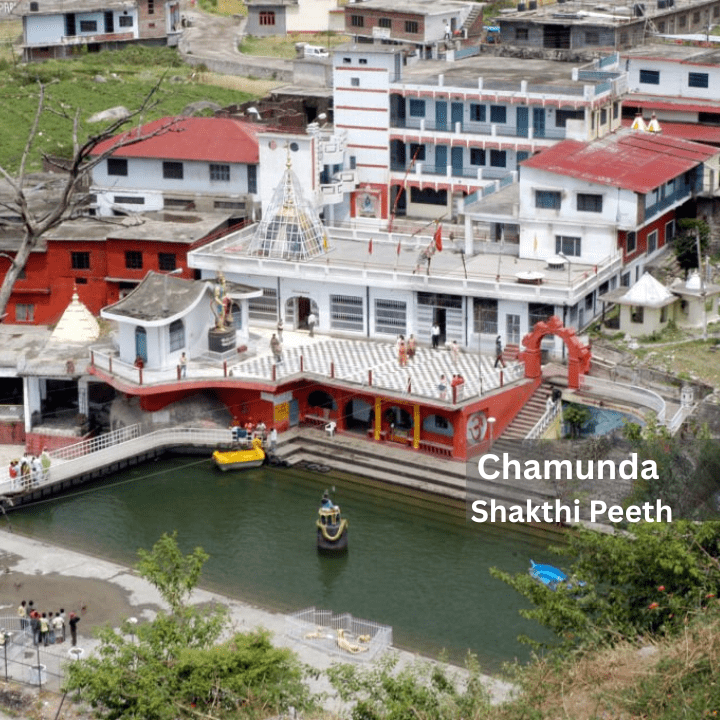
The temple rests on the banks of the Baner (Ban Ganga) River, with the snow-clad Dhauladhar ranges forming a majestic backdrop. The sound of flowing water, temple bells, and distant wind through cedars creates a naturally meditative atmosphere.
Unlike many mountain temples, the approach here is gentle, making it accessible to elderly devotees and families.
🏛️ The Temple and Inner Sanctum
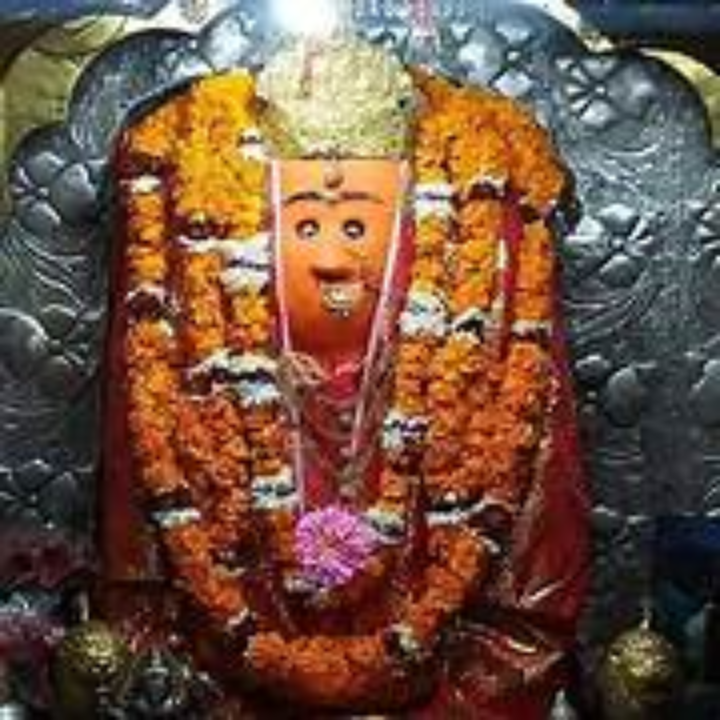
The present temple structure reflects traditional Himachali architecture, with sloping roofs designed for mountain weather and intricate wooden elements. The sanctum houses the murti of Maa Chamunda, draped in red and dark hues, adorned with garlands and symbolic offerings.
Near the sanctum stand images of:
Lord Hanuman, the guardian of strength
Bhairava, protector of the fierce Mother
The atmosphere inside is intense yet grounding. Devotees often pause longer than expected—not out of ritual, but because the space invites stillness.
🔱 Shiva–Shakti Unity at Chamunda Nandikeshwar Dham
The temple is also known as Chamunda Nandikeshwar Dham, highlighting the inseparable presence of Lord Shiva alongside Shakti.
Within the complex lies a Shiva Linga, revered as Nandikeshwar, and a cave-like sacred space where devotees perform abhisheka and quiet prayers. This union of Shiva and Shakti symbolizes:
Power balanced by awareness
Fierceness tempered by wisdom
Many pilgrims describe Chamunda Devi as a place where discipline, devotion, and inner silence meet.
🌊 The River, Ghats, and Sacred Surroundings
Steps lead down from the temple to the Baner River, where devotees often wash their hands and feet before darshan. The flowing water is seen as a purifier—not just of the body, but of restless thoughts.
The surrounding region is dotted with tea gardens, forest paths, and mountain views, making the temple not only a spiritual destination but a place of natural healing.
🎉 Worship, Festivals, and Daily Rhythm
Daily worship begins early in the morning and continues until evening, with aarti at sunrise and sunset. Tuesdays, Fridays, and days connected with Devi worship draw larger crowds.
During Navratri, the temple comes alive with:
Continuous chanting
Special yagnas
Devotional music through the night
Over time, practices have evolved—symbolic offerings now replace older sacrificial customs, preserving the fierce essence without violence.
🌺 Chamunda Devi in the Himachal Shakti Circuit
Chamunda Devi is often visited along with:
Brajeshwari Devi (Kangra)
Together, these shrines form a powerful spiritual journey through Dev Bhoomi Himachal, where Shakti is experienced in many moods—fire, protection, peace, and vision.
🌟 Conclusion: The Mother Who Stands Guard
Chamunda Devi Mandir is not a place of soft comfort—it is a place of quiet strength.
Here, the Mother does not promise ease; she promises protection. She does not remove challenges; she removes fear. In the presence of the river and the mountains, devotees learn that courage can be calm, and power can be silent.
As evening falls and the Dhauladhar peaks blush with fading light, the bells soften, the river flows on, and one feels a simple truth:
✨ When the Mother stands guard, nothing else needs to.