
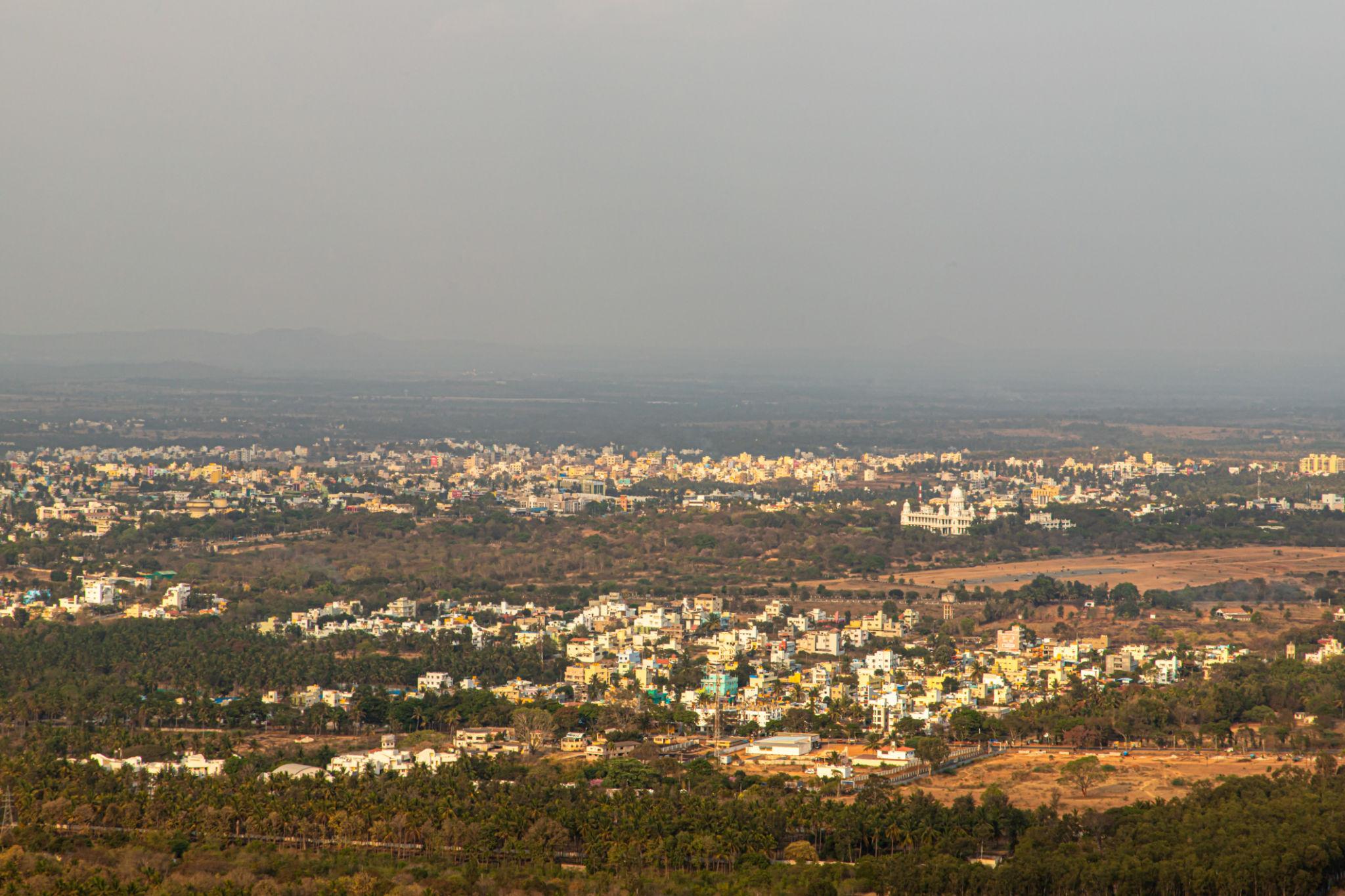
Chamundeshwari Shakti Peetha Mysore – The Guardian Goddess of Karnataka
Perched atop the majestic Chamundi Hills, the Chamundeshwari Shakti Peetha Mysore is one of Karnataka’s most powerful Devi shrines. Dedicated to Goddess Chamundeshwari — the fierce form of Durga who slew the demon Mahishasura — this hilltop temple has shaped the spiritual identity of Mysuru for centuries.
Revered both as a Shakti Peetha in Karnataka and as the Kuladevi of the Wodeyar dynasty, Chamundeshwari embodies divine protection, courage, and righteous victory.
Mythological Significance – The Slayer of Mahishasura
Chamundeshwari is a manifestation of Mahishasura Mardini, the Goddess who defeated the buffalo demon Mahishasura.
According to legend:
Mahishasura performed intense penance and gained near invincibility.
He began terrorizing the three worlds.
The gods invoked Shakti.
From their combined energies emerged Chamundeshwari.
She vanquished Mahishasura on this very hill.
The name “Mysore” (Mysuru) is derived from Mahishooru — the land of Mahisha — marking the eternal victory of Dharma over Adharma.
Shakti Peetha Context
While canonical lists of 51 Shakti Peethas vary across texts, local tradition reveres Chamundi Hills as a powerful Shakta Peetha, associated in some traditions with Sati’s hair falling here.
More importantly, it is regarded as a Siddha Kshetra — a place where prayers bear fruit swiftly.
Historical Evolution
The origins of the temple trace back to the 12th century Hoysala period, though it flourished under the Mysore Wodeyars.
Key Milestones:
Hoysala Era: Early shrine foundations
Vijayanagara Period: Structural expansions
17th Century: Seven-tiered Dravidian gopuram constructed
Wodeyar Dynasty: Adopted Chamundeshwari as royal patron deity
The Mysore Dasara celebrations continue to reflect this royal devotion.
Architectural Highlights
The Chamundeshwari Temple Mysore showcases classic Dravidian architecture.
Seven-Tiered Gopuram
An ornate entrance tower adorned with mythological carvings.
Sanctum (Garbhagriha)
The main idol depicts the Goddess with eight arms holding weapons symbolizing protection and justice.
Monolithic Nandi
Nandi Statue Chamundi Hills
A massive 5-meter granite Nandi sits halfway up the hill’s stairway.
Rituals and Worship
Daily pujas include:
Usha Kala Puja (morning)
Maha Naivedya
Evening Deeparadhana
Devotees offer:
Coconuts
Kumkum
Sarees
Lemon garlands
The mantra commonly chanted:
Om Aim Hreem Kleem Chamundaye Vichche
Major Festivals
Mysore Dasara
The most spectacular celebration.
During Dasara:
The idol is placed in a golden howdah.
The Jambu Savari procession moves through Mysore city.
Lakhs of devotees participate.
Ashada Fridays
Highly auspicious for Devi worship.
Navaratri
Nine days of elaborate alankarams and cultural programs.
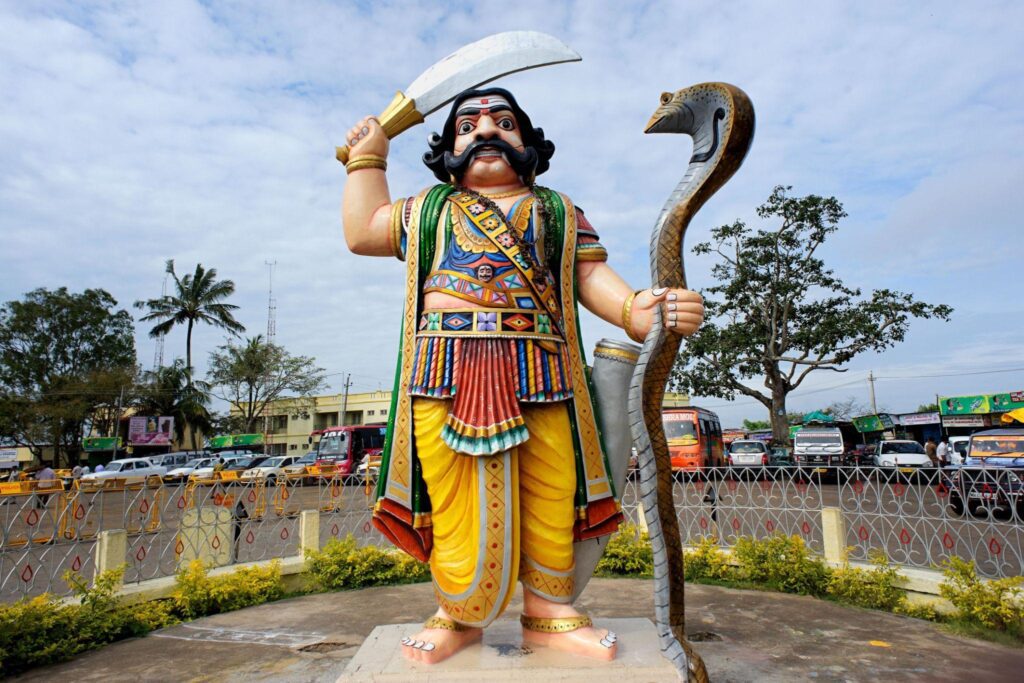
The Mahishasura Statue
Mahishasura Statue
Near the summit stands a massive statue of Mahishasura holding a sword and serpent — symbolizing the mythological moment of his defeat.
Spiritual Symbolism
Chamundeshwari represents:
Destruction of ego
Removal of ignorance
Protection from negative forces
Inner strength
The climb up the 1,000 steps itself becomes symbolic — each step shedding inertia.
Pilgrimage Guide
📍 Location: Chamundi Hills, Mysuru, Karnataka
🚗 13 km from Mysore city
🛫 Nearest Airport: Mysore / Bengaluru
🚆 Nearest Railway Station: Mysore Junction
Best Time: October–February
Avoid peak summer afternoons.
Nearby Sacred Sites
Mahabaleshwar Temple (ancient Shiva shrine)
Brindavan Gardens
Internal Shakti Peetha Circuit
For your complete pilgrimage journey, explore:
And follow the master guide on 51 Shakti Peethas of India.
FAQs
Is Chamundeshwari Temple a Shakti Peetha?
It is regionally revered as a powerful Shakta Peetha and Siddha Kshetra.
How many steps are there?
Approximately 1,000 steps lead to the hilltop temple.
What is special about Mysore Dasara?
The Goddess is taken in royal procession in a golden howdah.
Is photography allowed?
Allowed in outer areas; restricted inside sanctum.
Final Reflection
At the Chamundeshwari Shakti Peetha Mysore, devotion feels both fierce and maternal. The Goddess who once defeated Mahishasura continues to guide devotees in overcoming their inner demons.
From the hilltop, as Mysuru spreads below like a tapestry of lights, one understands why this shrine is not just a temple — but a guardian presence watching over an entire kingdom.