Hinglaj Shakti Peeth: The Hidden Sacred Temple in Pakistan’s Desert
Deep inside the golden deserts of Balochistan, Pakistan, lies a magical and sacred place known as Hinglaj Shakti Peeth. Although the temple is in a remote desert, more than 2.5 lakh pilgrims visit every year to seek the blessings of Hinglaj Mata, one of the most powerful forms of Shakti. For many Hindu communities, this is not just a temple—it is their ancestral goddess, their Kuldevi, and a symbol of unbroken devotion.
The beauty of Hinglaj Shakti Peeth lies not only in its ancient origins but also in the spirit of unity and courage it brings out in those who journey to this faraway cave temple.
.
🌟 Why Hinglaj Shakti Peeth Is So Special
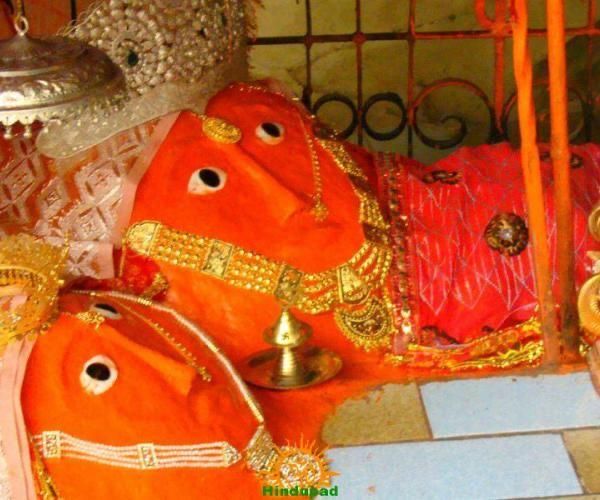
Hinglaj Shakti Peeth is believed to be the place where Goddess Sati’s Brahmarandhra (crown of her head) fell after her divine body was scattered across Earth. This gives the temple extremely high spiritual energy. Among all Shakti Peethas, places connected to the head are considered powerful centers of cosmic consciousness.
Inside the natural cave, there is no statue or elaborate idol. Instead, the goddess is represented by a small sacred stone covered in vermillion (sindoor). The simplicity of the shrine makes the experience feel raw, ancient, and deeply divine.
The accompanying Bhairava here is Bhimalochana, who protects the temple and its devotees.
📖 The Story Behind Hinglaj Shakti Peeth
To understand the temple, we must revisit the beautiful and emotional story of Goddess Sati and Lord Shiva.
Princess Sati married Shiva, but her father Daksha disapproved. During a grand yajna, Daksha insulted Shiva in front of everyone. Unable to bear the humiliation of her beloved, Sati sacrificed her life in the sacrificial fire.
Lord Shiva, shattered with grief, carried her body and performed the Tandava, the cosmic dance of destruction. To save the universe, Lord Vishnu gently separated Sati’s body using his Sudarshan Chakra. Wherever a part fell, a Shakti Peeth was formed.
At Hinglaj, her Brahmarandhra fell, making it a site filled with spiritual light and the essence of pure consciousness.
Children understand it easily when explained like this:
👉 “Hinglaj Shakti Peeth is where Goddess Sati’s head fell, so it has deep divine power.”
⛰️ A Temple Inside a Cave
What makes this temple truly fascinating is that Hinglaj Shakti Peeth is inside a natural cave. Unlike other temples, there are no carvings, painted walls, or towering gopurams. It is nature itself that cradles the goddess.
The cave sits inside Hingol National Park, surrounded by:
rugged mountains
flowing river beds
sandy deserts
striking rock formations, including the famous Balochistan Sphinx
The atmosphere feels ancient and untouched, as if time has paused to protect the sacredness.
🚗 How Pilgrims Reach Hinglaj Mata
Most devotees travel from Karachi, taking the scenic Makran Coastal Highway. After a 5–6 hour drive, they trek through a narrow canyon that leads to the quiet cave temple.
The journey is not easy, but pilgrims describe it as life-changing. The further they walk, the closer they feel to the goddess.
During the annual Hinglaj Yatra, thousands walk together, singing bhajans, sharing food, and helping one another. This yatra becomes a beautiful reminder that faith creates family, even among strangers.
🔥 The Chandragup Mud Volcano Ritual
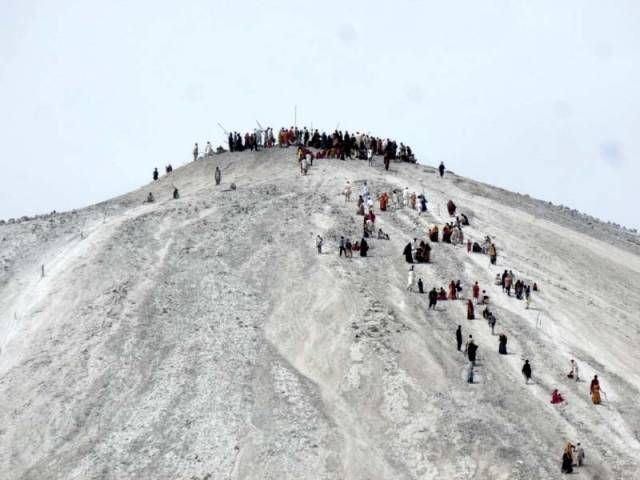
One of the most unique aspects of Hinglaj Shakti Peeth is the ritual at Baba Chandragup, a sacred mud volcano considered an embodiment of Lord Shiva.
Before entering the temple, devotees must visit Chandragup and:
announce their name
confess their mistakes
express their wishes
offer coconuts or flowers
If the mud bubbles or responds, devotees believe the goddess has accepted their prayers. Children especially find this part fascinating, as it feels like the earth itself is speaking.
Pilgrims stay up at night, fasting, praying, and preparing their hearts for the journey ahead.
🌸 What Devotees Do Inside the Temple
Inside the peaceful cave, worship is simple and heartfelt:
breaking coconuts
applying vermillion
touching the stone walls for blessings
meditating in silence
The energy inside is strong and soothing. Even newcomers feel a deep sense of peace, as if the goddess is welcoming them home.
🤝 Unity Beyond Religion
One of the most inspiring aspects of Hinglaj Shakti Peeth is its interfaith harmony.
Local Muslim communities, especially the Zikri Muslims, lovingly protect the temple and call it “Nani Mandir” (Grandmother’s Temple). They often join Hindu pilgrims and provide guidance through the desert.
This unity shows that Hinglaj Mata is not just a Hindu goddess—she is a universal mother figure who brings people together.
🕌 Cultural Importance Across Borders
Many communities consider Hinglaj Mata their Kuldevi, including:
Lohana
Sindhi communities
Khatri
Banjara
Bhavsar
Gadhvi
Barot families
Even the famous Sufi saint Shah Abdul Latif Bhittai wrote poetry about his divine experience at the shrine.
This temple beautifully connects India and Pakistan through spiritual heritage.
🌟 Conclusion
Hinglaj Shakti Peeth is not just a temple—it is a journey of devotion, courage, and unity. From the legend of Goddess Sati to the sacred Chandragup mud volcano, from the peaceful cave temple to the heartwarming support of local communities, every part of Hinglaj Mata’s story inspires faith and strength.
The temple shows that:
✨ True devotion survives any obstacle
✨ Spirituality belongs to everyone
✨ Mother Goddess protects her children across all lands
Even today, Hinglaj Mata continues to bless millions, reminding us that the divine light shines in every corner of the world—even in the quiet dunes of a distant desert.