
Guhyeshwari Shakti Peeth Kathmandu- The Hidden Feminine Power of Nepal’s Sacred Land
Guhyeshwari Shakti Peeth Kathmandu is one of the most mysterious and powerful among the 51 Shakti Peethas. Located in Kathmandu, near the sacred Pashupatinath Temple, this ancient shrine marks the spot where a deeply sacred part of Goddess Sati is believed to have fallen.
The word Guhya means hidden or secret. True to its name, Guhyeshwari Shakti Peeth Kathmandu represents the subtle, inward, and esoteric power of the Divine Mother, making it a revered destination for devotees, yogis, and Tantric practitioners seeking inner purification and awakening.
Location and Sacred Geography of Guhyeshwari Shakti Peeth Kathmandu
Guhyeshwari Shakti Peeth Kathmandu is situated on the banks of the holy Bagmati River, just east of the Pashupatinath temple complex. Together, these two shrines symbolize the eternal unity of Shiva and Shakti—consciousness and energy.
This sacred zone is also respected by Vajrayana Buddhists, who associate the site with Vajravarahi, making Guhyeshwari Shakti Peeth Kathmandu a rare spiritual bridge between Hindu and Buddhist traditions.
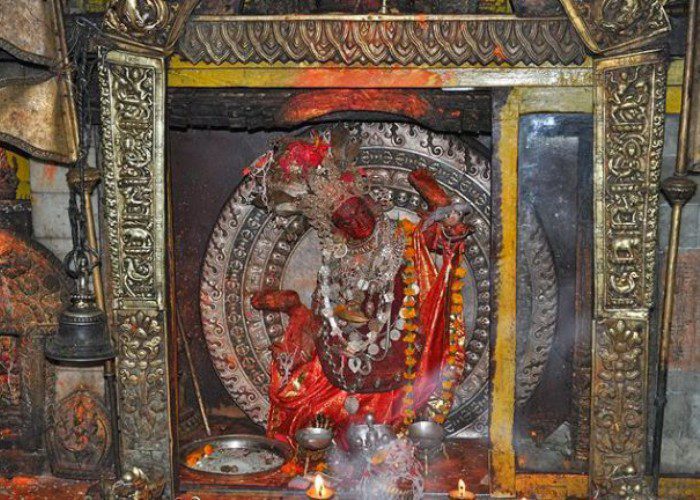
Guhyeshwari Shakti Peeth Kathmandu-Nepal
Mythological Origin of Guhyeshwari Shakti Peeth Kathmandu
According to Puranic tradition, Goddess Sati sacrificed herself at her father Daksha’s yajna after he insulted her husband Lord Shiva. Grief-stricken, Shiva carried her body across the cosmos in the fierce Tandava dance.
To restore balance, Lord Vishnu released the Sudarshana Chakra, dismembering Sati’s body. Wherever a part fell, a Shakti Peeth emerged.
At Guhyeshwari Shakti Peeth Kathmandu, Tantric and Puranic texts such as the Meru Tantra, Skanda Purana, and Devi Bhagavata Purana state that Sati’s guhya—interpreted as the hips, yoni, or secret generative organ—fell here. Because of this, the peeth is associated with creation, fertility, and hidden spiritual knowledge.
Goddess Guhyeshwari: Form and Meaning
The presiding deity of Guhyeshwari Shakti Peeth Kathmandu is Goddess Guhyeshwari, a form of Adi Shakti / Parvati.
Unlike most temples:
There is no anthropomorphic idol
Worship centers on a kalasha (sacred pot) and yantra
The focus is on energy rather than form
This unique practice emphasizes that true Shakti is experienced inwardly, not merely seen.
Tantric Significance of Guhyeshwari Shakti Peeth Kathmandu
Among all Shakti Peethas, Guhyeshwari Shakti Peeth Kathmandu holds exceptional importance in Tantric traditions.
Varahi Tantra describes it as supreme in subtle power
Sadhakas believe worship here awakens kundalini shakti
The peeth is associated with guhya vidya, secret wisdom taught by Shiva to Parvati
Despite its Tantric depth, common devotees—especially women—visit this temple seeking:
Fertility blessings
Emotional healing
Removal of hidden fears and karmic blocks
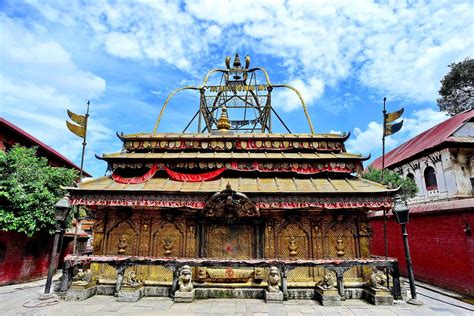
Guhyeshwari Temple Kathmandu-Nepal
Historical Background of Guhyeshwari Shakti Peeth Kathmandu
The site is ancient, though the present structure was renovated in the 17th century by King Pratap Malla of Nepal.
Daily rituals are performed by Newar priests from Karmacharya and Rajopadhyaya lineages, following Sarvamnaya Tantra, which blends:
Vedic traditions
Kaula Tantra
Indigenous Newari practices
Architecture and Temple Layout
Guhyeshwari Shakti Peeth Kathmandu reflects classic Newari pagoda architecture:
Tiered roofs with golden finials
Intricately carved wooden struts
A calm stone courtyard for meditation
A sacred water spring inside the complex is believed to be mystically connected to Swayambhunath Stupa.
Photography is generally restricted near the sanctum.
Rituals and Festivals at Guhyeshwari Shakti Peeth Kathmandu
Daily worship includes:
Mangal aarti at dawn
Offerings of red flowers, sindoor, ghee lamps
Evening shringar aarti
Major festivals:
Navaratri & Dashain
Maha Shivaratri (paired pilgrimage with Pashupatinath)
Bala Chaturdashi (ancestral rites along the Bagmati)
Visiting Guhyeshwari Shakti Peeth Kathmandu – Travel Guide
📍 Location: Deopatan area, Kathmandu
✈️ Nearest airport: Tribhuvan International Airport (15–20 minutes)
🕉️ Timings: Early morning to evening
⚠️ Inner sanctum entry may be restricted to Hindus
Dress modestly and follow temple customs.
Spiritual Significance of Guhyeshwari Shakti Peeth Kathmandu
Guhyeshwari Shakti Peeth Kathmandu teaches a profound spiritual truth:
The most powerful forces work silently, deep within.
This peeth guides seekers toward inner purity, humility, and awakening of the Divine Feminine within the heart.
Quick Facts – Guhyeshwari Shakti Peeth Kathmandu
Location: Kathmandu, Nepal
Goddess: Guhyeshwari (Adi Shakti)
Body part of Sati: Guhya (secret generative organ)
Nearby shrine: Pashupatinath Temple
Associated river: Bagmati
Best time to visit: Navaratri, Oct–Dec, Mar–Apr
Frequently Asked Questions (FAQ)
Where is Guhyeshwari Shakti Peeth Kathmandu located?
Guhyeshwari Shakti Peeth Kathmandu is located near the Bagmati River, close to the Pashupatinath Temple complex in Kathmandu, Nepal.
Which body part of Goddess Sati fell at Guhyeshwari Shakti Peeth?
According to Tantric and Puranic texts, Goddess Sati’s guhya (secret generative organ) fell at Guhyeshwari Shakti Peeth Kathmandu.
Is Guhyeshwari Shakti Peeth one of the 51 Shakti Peethas?
Yes, Guhyeshwari Shakti Peeth Kathmandu is traditionally included among the 51 sacred Shakti Peethas.
Conclusion: The Hidden Grace of the Divine Mother
Guhyeshwari Shakti Peeth Kathmandu is not a place of loud miracles, but of silent transformation. Nestled beside the Bagmati and watched over by Pashupatinath, this sacred shrine invites seekers to discover the Divine Mother within their own inner sanctum.
May Maa Guhyeshwari bless all devotees with purity, courage, and awakening 🌺