Katyayani (Yogmaya) Shakti Peeth of Mathura- The Sacred Shakti of Gokul and Braj Bhoomi
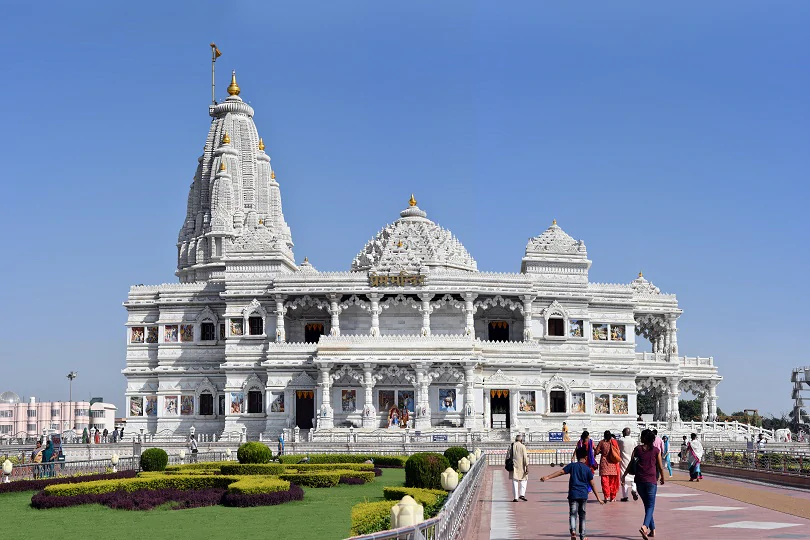
The Katyayani Shakti Peeth of Mathura, often reverently referred to in local tradition as Devi Gokul Shakti Peeth, is one of the sacred seats of the Divine Mother in Braj Bhoomi. Located in the spiritually vibrant region of Mathura, this Shakti Peeth beautifully bridges Shakta devotion with the Krishna-centric faith of Braj.
Pilgrims believe that this holy site marks the place where Goddess Sati’s hair (keśa) fell during the cosmic event following her self-immolation. Here, the Mother is worshipped as Goddess Katyayani, also known as Yogmaya or Mahamaya—the divine power behind creation, protection, and cosmic balance.
Sacred Geography of the Shakti Peeth in Braj
The Katyayani (Yogmaya) Shakti Peeth lies within the Braj cultural zone, closely connected with Vrindavan and Gokul. Flowing gently through this region is the sacred Yamuna, whose ghats form an essential part of the devotional landscape.
Braj is unique because Krishna bhakti and Devi worship coexist naturally. Pilgrims often experience the Mother here not as distant power, but as a protective, maternal presence watching over Krishna’s land.
Mythological Origin of Katyayani (Yogmaya) Shakti Peeth
According to Puranic tradition, Goddess Sati gave up her body at Daksha’s yagna after her husband Lord Shiva was insulted. Overcome with grief, Shiva carried her body across the universe in the cosmic Tandava.
To restore balance, Lord Vishnu released the Sudarshana Chakra, dividing Sati’s body into parts that fell across sacred locations, forming the 51 Shakti Peethas.
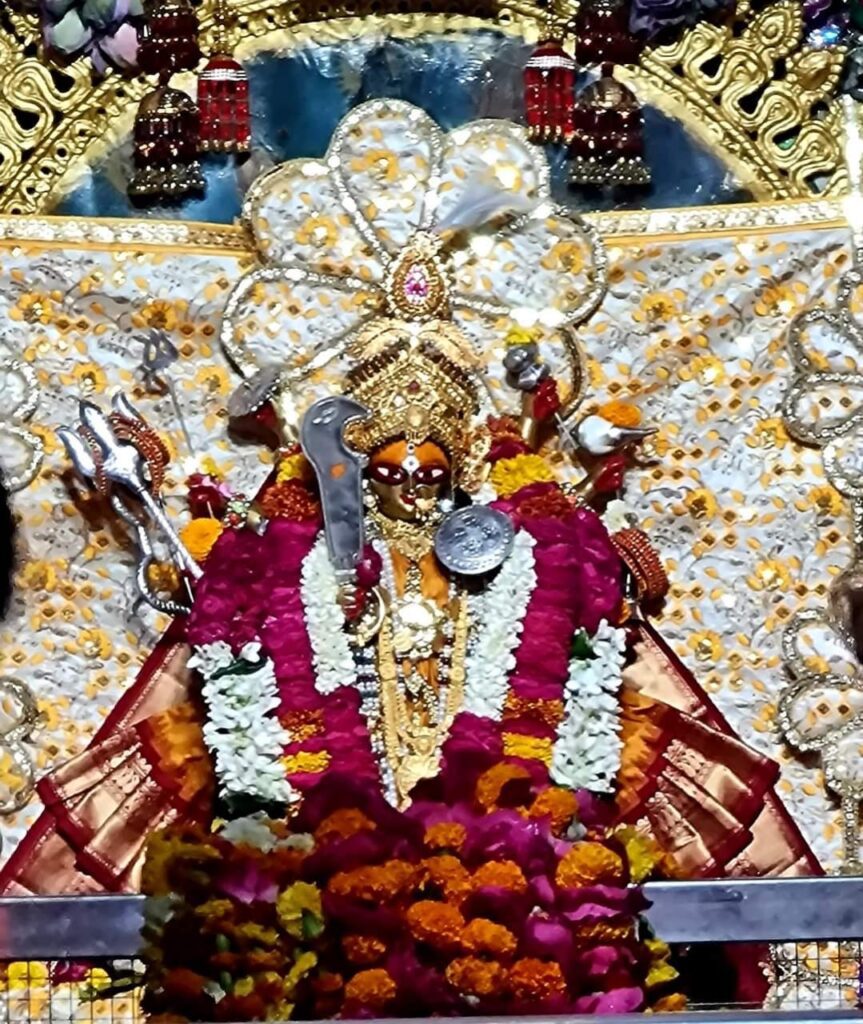
At this Mathura-region Peeth, Sati’s hair (keśa) is believed to have fallen, manifesting the Mother as Katyayani / Yogmaya.
Yogmaya and the Krishna Connection
One of the most beautiful aspects of this Shakti Peeth is its connection to Krishna Lila.
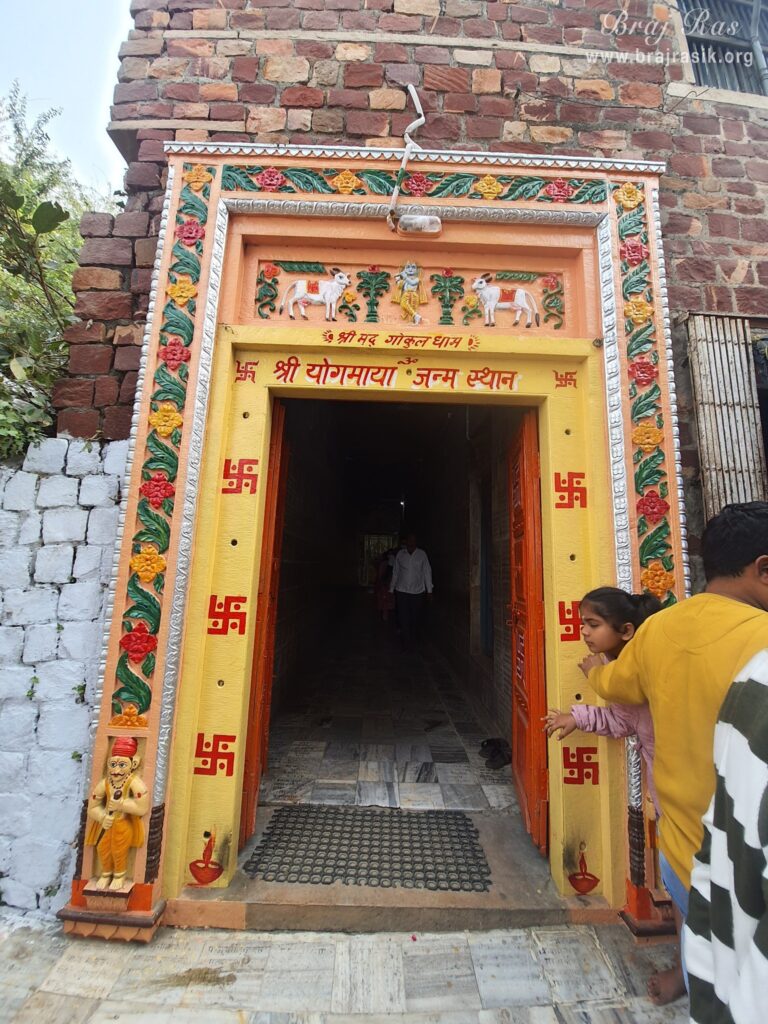
In Krishna’s birth story, the infant girl born to Yashoda and Nanda is revealed as Yogmaya. When Kamsa attempts to destroy her, she slips from his hands, rises into the sky, and declares that his destroyer has already been born elsewhere.
This moment establishes Yogmaya as:
The divine protector
The veil of cosmic illusion
The hidden power guiding destiny
Thus, the Katyayani Shakti Peeth stands as the Shakti behind Krishna’s divine play.
Deity, Bhairava, and Iconography
Presiding Shakti: Goddess Katyayani / Yogmaya / Mahamaya
Associated Bhairava: Bhuteshwar or Trikaleshwar (local Shaiva tradition)
Form of worship: Murti or yantra-centered shrine
Offerings: Red flowers, red chunri, sindoor, sweets, lamps
Devotees especially pray here for clarity, courage, protection, and removal of inner fear.
Festivals and Worship Practices
The Katyayani (Yogmaya) Shakti Peeth comes alive during:
Navaratri (Vasanta & Sharada) – nine nights of Devi worship
Ashtami days – highly auspicious for Shakti sadhana
Krishna Janmashtami – blending Vaishnava and Shakta devotion
Kartik month – Yamuna deepdan and evening aartis
Daily rituals include mangal aarti, archana, and evening shringar aarti.
Pilgrim’s Guide (Simple & Family-Friendly)
Nearest railway: Mathura Junction
Nearest airports: Agra (~60 km), Delhi (~160 km)
Local travel: Autos and taxis within Mathura–Vrindavan
Best time: October to March
Pilgrims usually combine this Shakti Peeth with visits to Krishna Janmabhoomi, Gokul, and Yamuna ghats.
i.
Spiritual Meaning of This Shakti Peeth
This sacred seat teaches a gentle truth:
Shakti does not always roar—sometimes she protects silently.
Devotees believe prayer here helps remove confusion (avidya), strengthen inner resolve, and align one’s life with dharma.
Conclusion: The Mother of Gokul and Braj
The Katyayani (Yogmaya) Shakti Peeth of Mathura reminds us that every divine play needs divine power behind it. In Braj, Krishna’s flute and the Mother’s protection flow together as one spiritual harmony.
May the Divine Mother bless all seekers with clarity, courage, and peace 🌺