
🔥 Jwalamukhi Shakti Peeth: The Eternal Flame of the Divine Mother
🌄 Introduction: Where the Goddess Speaks as Fire
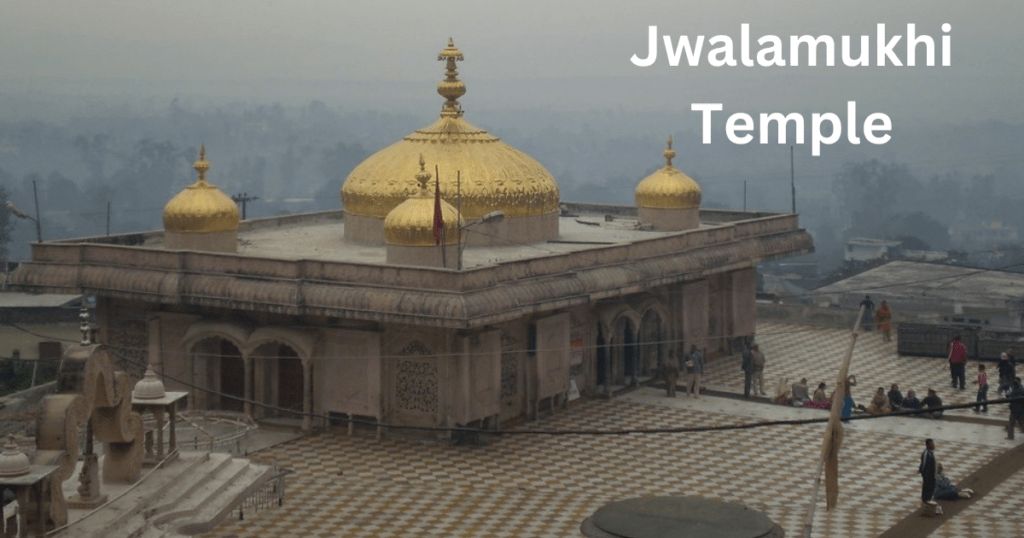
In the gentle hills of Himachal Pradesh, where the air carries the scent of pine and prayer, there exists a temple unlike any other—Jwalamukhi Shakti Peeth.
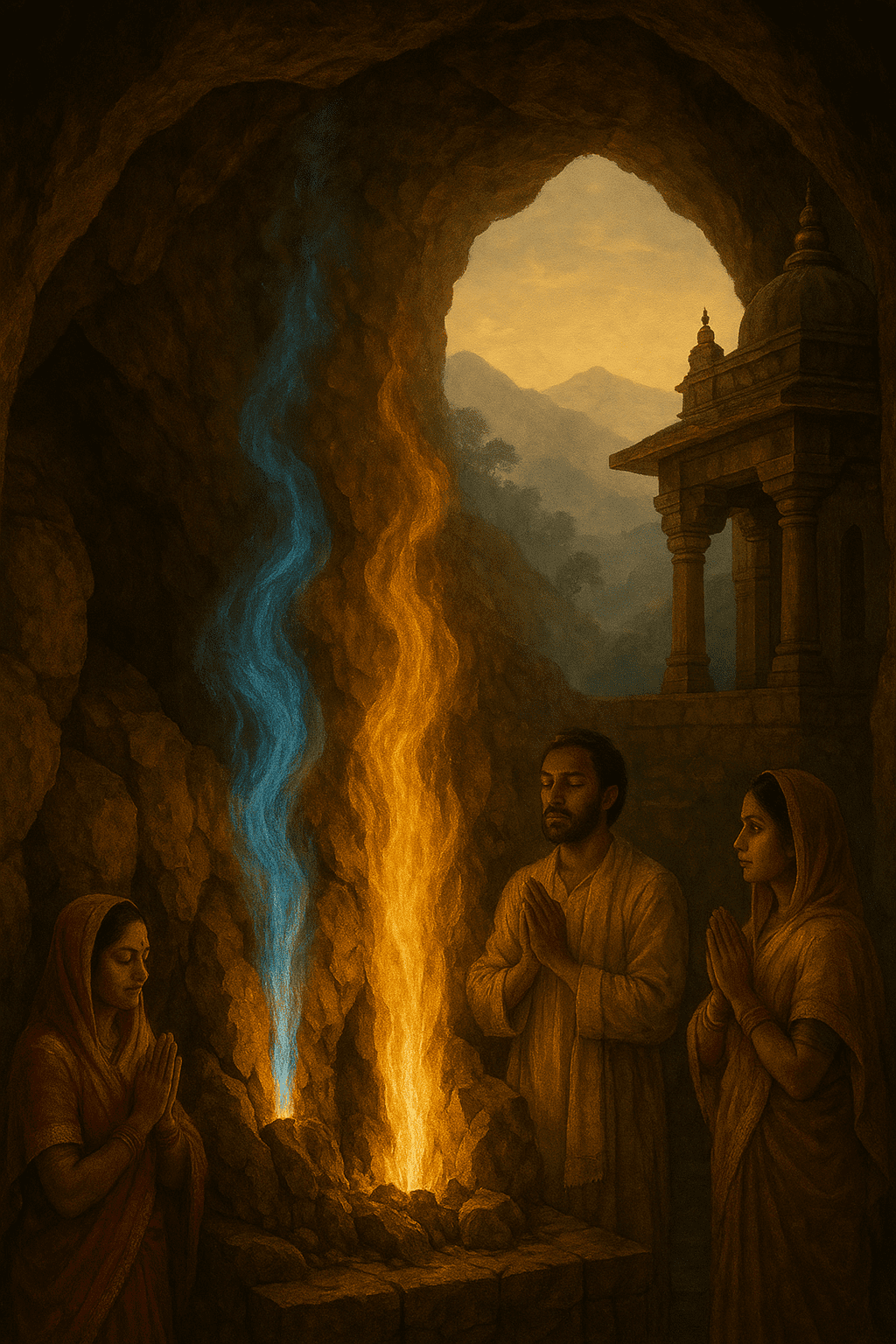
Here, the Goddess does not sit silently in stone or metal. She breathes as fire.
From cracks in ancient rock, blue and golden flames rise endlessly, untouched by wind, water, or time. Devotees say this is not ordinary fire—it is Shakti herself, alive and listening. For centuries, pilgrims have climbed these hills to witness the Mother who speaks without words, teaches without books, and blesses through pure presence.
🕉️ Why Jwalamukhi Shakti Peeth Is Sacred
Jwalamukhi Shakti Peeth is one of the 51 sacred Shakti Peethas, divine places where parts of Goddess Sati’s body fell.
At this holy site, it is believed that Sati’s tongue (Jihva) descended upon the earth.
The tongue represents speech, wisdom, truth, and divine command. That is why the Goddess appears here as flame—a living symbol of sacred expression and power.
The name Jwalamukhi itself means “She whose mouth is fire.”
This Peeth teaches that the Divine Mother can appear not only in form, but also as elemental energy.
📖 The Legend of Sati and the Birth of the Shakti Peethas
Long ago, Goddess Sati married Lord Shiva against the wishes of her father, King Daksha. When Daksha performed a grand yajna and insulted Shiva publicly, Sati could not bear the humiliation of her beloved. In pain and devotion, she sacrificed herself in the sacred fire.
Lord Shiva, shattered by grief, carried Sati’s body and performed the cosmic Tandava, shaking the universe. To restore balance, Lord Vishnu used his Sudarshana Chakra, gently separating Sati’s body. Wherever a part fell, a Shakti Peeth was formed.
At Jwalamukhi Shakti Peeth, Sati’s tongue fell—transforming the land into a place where the Goddess speaks eternally through flame.
For children and newcomers, it is often explained simply:
“At Jwalamukhi, the Mother speaks as fire instead of words.”
⛰️ Geography of Grace: Where the Temple Stands
Jwalamukhi Shakti Peeth is located in the Kangra district of Himachal Pradesh, about 35 km from Kangra town and 55 km from Dharamshala.
Surrounded by green hills and flowing streams, the temple feels both welcoming and mysterious. The path winds gently upward, preparing the pilgrim not just physically, but inwardly.
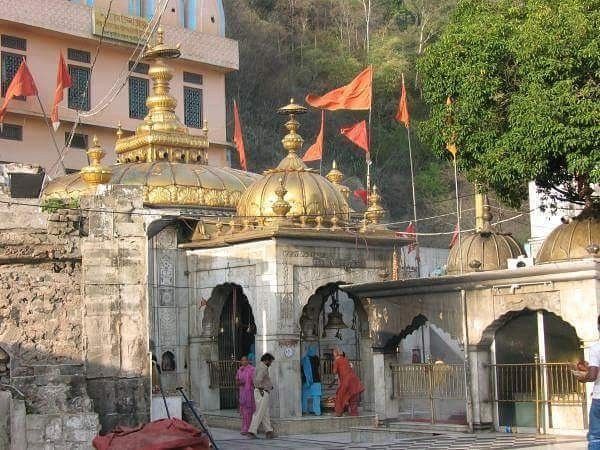
Unlike grand temples, the outer structure here is simple. The true wonder lies within.
”
🔥 The Sanctum: Meeting the Goddess as Living Flame
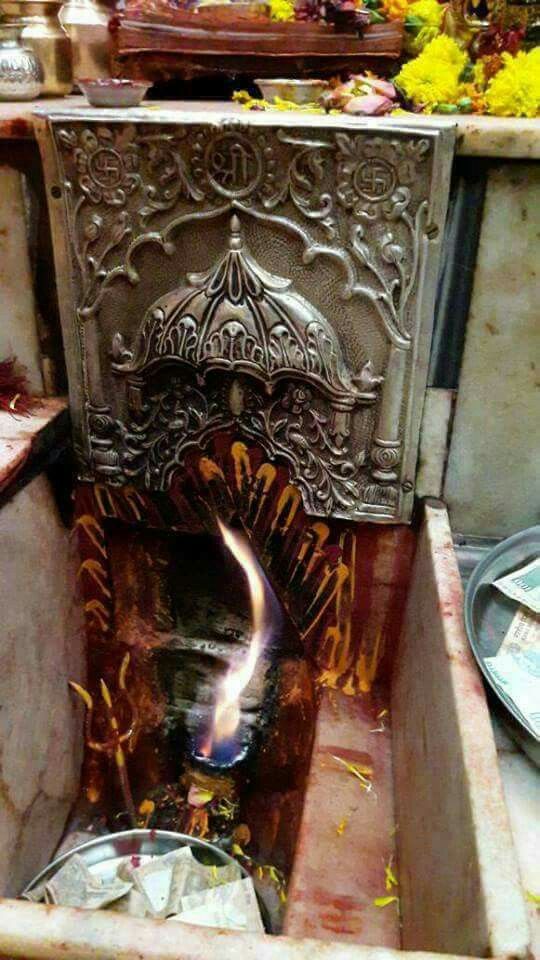
Inside the sanctum, there is no idol.
Instead, flames emerge naturally from fissures in the rock—burning steadily for thousands of years.
These flames are fed by natural gas, yet devotees believe they are sustained by divine will. Water, ghee, or cloth cannot extinguish them. Even attempts by kings and invaders failed.
The main flame is associated with Ambika Devi, and nearby flames are revered as forms such as:
Mahakali
Saraswati
Hinglaj
Annapurna
Chandi
Vindhyavasini
Each flame feels distinct, yet united—just as the Mother is one and many.
🏛️ History and Royal Devotion
Local tradition says the Pandavas first worshipped these flames during their exile.
Later, the temple was rediscovered by King Bhumi Chandra of Kangra, guided by a divine sign involving a sacred cow.
Many rulers became devoted patrons.
Mughal Emperor Akbar is said to have tried to test the flames by pouring water over them—but failed. In humility, he offered a golden canopy to the Goddess.
The temple was damaged in the 1815 Kangra earthquake, but rebuilt with devotion. Maharaja Ranjit Singh gifted silver doors, which still adorn the shrine.
Through centuries of upheaval, the flames never went out.
🌸 Rituals and Daily Worship
Worship at Jwalamukhi Shakti Peeth begins early in the morning with Mangala Aarti.
Throughout the day, priests perform aartis, chant Devi stotras, and offer symbolic items into the flames.
Common offerings include:
Coconuts
Red cloth
Coins and silver
Flowers
Unlike other temples, offerings are not placed before an idol—they are offered directly to fire, symbolizing surrender of ego and intention.
🎉 Festivals: When the Hills Glow Brighter
During Navaratri, the temple becomes a river of devotion.
Thousands gather for:
Jagrans
Kirtans
Devi Mahatmya recitations
The entire complex glows with lamps, echoing the eternal flame within.
Other important occasions include:
Jwalamukhi Jayanti
Makar Sankranti
Tuesdays and Fridays (considered highly auspicious)
🌺 Spiritual Significance and Blessings
Because this Peeth is linked to the tongue, devotees pray here for:
Truthful speech
Legal justice
Removal of false accusations
Success in teaching, singing, or public speaking
Women pray for safe childbirth and family harmony.
Spiritual seekers feel the place awakens inner fire (Kundalini).
Many pilgrims speak of miracles—but the greatest miracle is often inner clarity.
🚗 How to Reach Jwalamukhi Shakti Peeth
✈️ Nearest airport: Gaggal (Kangra) Airport
🚆 Nearest railhead: Pathankot Junction
🚌 Regular buses from Kangra, Dharamshala, and Pathankot
Temple-run dharamshalas and hotels are available nearby.
🤍 A Temple That Teaches Without Words
Science explains the flames as natural gas seepage.
Devotion sees them as eternal Shakti.
At Jwalamukhi Shakti Peeth, both views coexist peacefully—because faith here is not afraid of understanding. The flame teaches silently:
Truth burns steadily. Ego burns away.
🌟 Conclusion: Carrying the Flame Home
When a pilgrim leaves Jwalamukhi Shakti Peeth, the fire does not stay behind.
It travels quietly—into the heart, into speech, into action.
The Goddess who appears as flame reminds us:
✨ Speak with truth
✨ Act with courage
✨ Burn away fear, not love
Jwalamukhi Shakti Peeth is not just a destination—it is a living lesson, glowing gently through time, calling every soul back to its inner light.