Madurai Meenakshi Shakti Peetha – The Sacred Eye of the Goddess
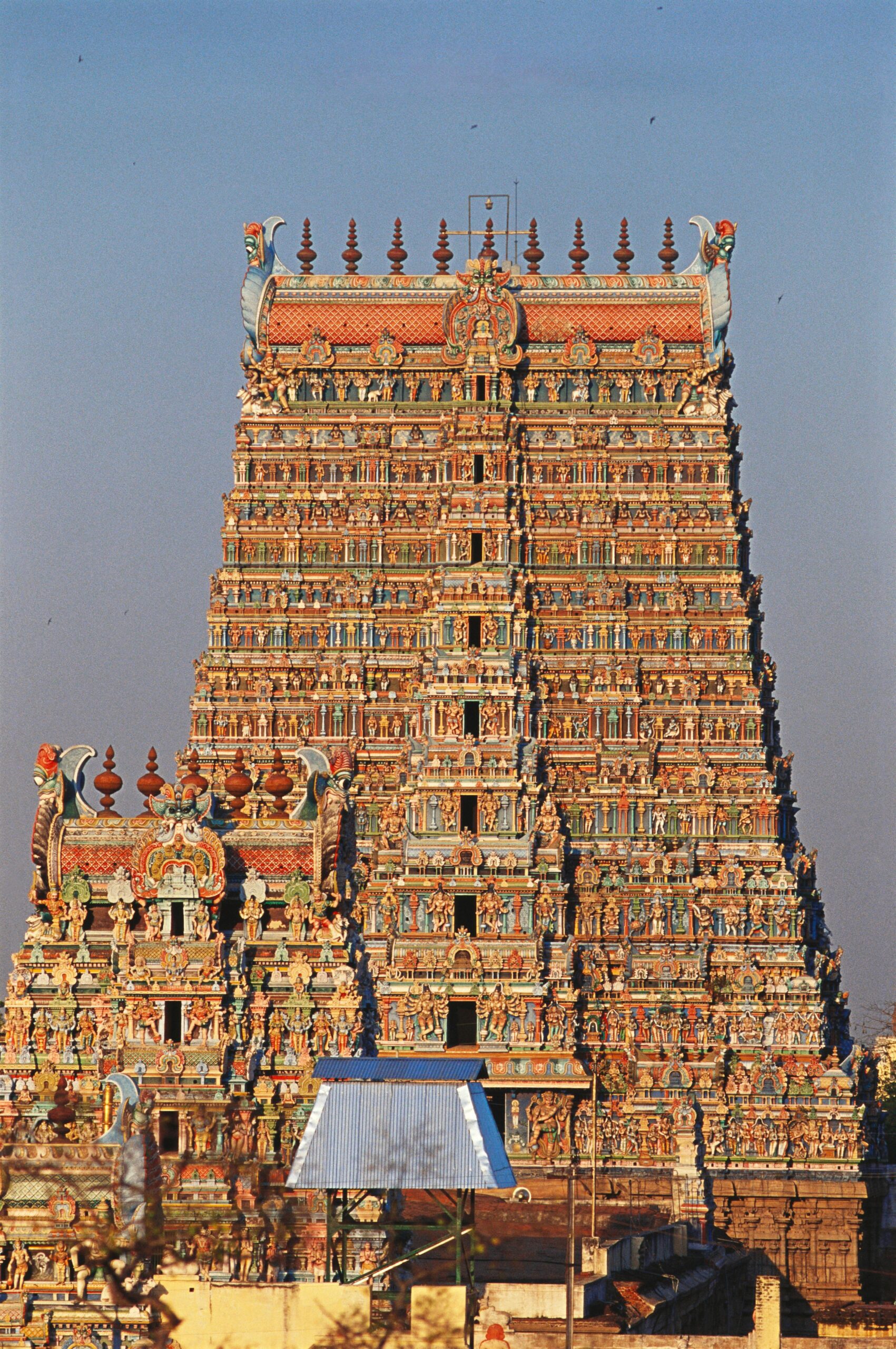
The Madurai Meenakshi Shakti Peetha stands at the spiritual heart of Tamil Nadu, where devotion, architecture, and sacred geography converge. Revered as one of the powerful Shakti Peethas of South India, this temple honors Goddess Meenakshi, an incarnation of Parvati, alongside her consort Lord Sundareswarar (Shiva).
In the Shakti Peetha tradition, Madurai is venerated as the site where Sati’s divine eye fell—symbolizing insight, compassion, and unwavering protection.
Mythological Origin – The Eye of Sati
According to sacred lore, after Sati immolated herself at Daksha’s yajna, Lord Shiva wandered in grief carrying her body. To restore cosmic balance, Lord Vishnu used the Sudarshana Chakra, and her body parts sanctified various regions of the Indian subcontinent.
At Madurai, her eye (kann) is believed to have fallen, manifesting as Meenakshi—the “fish-eyed” Goddess whose gaze never blinks, protecting devotees at all times.
The Birth of Meenakshi
Tamil legend narrates that King Malayadhwaja Pandya and Queen Kanchanamala performed a yajna seeking a child. From the sacred fire emerged a girl with three breasts. A divine voice declared that the third breast would vanish when she met her destined husband.
When she encountered Shiva in the form of Sundareswarar, the prophecy fulfilled itself. Their celestial wedding—Meenakshi Thirukalyanam—remains the spiritual axis of Madurai.
Historical Evolution
Sangam Era (early centuries BCE): Literary references to Madurai’s sacred identity
Pandya Dynasty: Early temple foundations
Chola Additions: Structural expansions
Nayaka Renaissance (16th–17th century): Grand gopurams, corridors, and halls under Tirumala Nayaka
Modern Conservation: Managed by Tamil Nadu HR&CE Department
The present complex spans approximately 14 acres and reflects centuries of artistic refinement.
Architectural Grandeur
Towering Gopurams
The temple features 14 monumental gateway towers, adorned with thousands of painted stucco figures narrating mythological episodes.
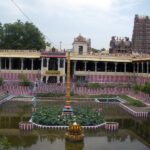
Golden Lotus Tank (Potramarai Kulam)
Golden Lotus Tank
A sacred water body symbolizing purification and introspection before darshan.Hall of a Thousand Pillars
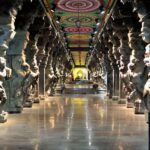
Aayiram Kaal Mandapam
An architectural marvel with sculpted yalis and musical pillars.
Rituals and Daily Worship
Daily rituals at the Meenakshi Amman Temple Madurai follow a precise Shaiva-Shakta tradition:
Suprabhata Seva
Kala Sandhi Puja
Uchikala Puja
Sayaraksha Puja
Palliarai Ceremony (symbolic reunion of Meenakshi and Sundareswarar)
Offerings include turmeric, kumkum, bangles, garlands, and silk sarees.
Major Festivals
Chithirai Festival
The grand reenactment of Meenakshi’s coronation and marriage—drawing millions.
Navaratri
Nine nights celebrating Shakti’s diverse forms through music and dance.
Float Festival (Theppotsavam)
Processions on illuminated temple tanks create a spectacular devotional sight.
Cultural Importance
The temple anchors:
Bharatanatyam traditions
Thevaram recitations
Artisan guilds and markets
Tamil devotional poetry
It remains one of the most visited Hindu temples globally.
Travel Guide
📍 Location: Madurai, Tamil Nadu
✈️ Airport: Madurai (IXM)
🚆 Rail: Madurai Junction
🕒 Best time: October–March
Dress modestly; photography is restricted in inner sanctums.
Nearby Sacred Circuit
Alagar Kovil
Pazhamudhircholai
Thirumalai Nayak Palace
You can also connect this temple within your broader 51 Shakti Peethas of India pilgrimage journey.
Final Reflection
The Madurai Meenakshi Shakti Peetha is not merely a monument—it is a living embodiment of compassion and sovereignty. In her unblinking gaze lies assurance: devotion is always seen, always answered.