Introduction: A Place Where Life Softly Bows to Eternity
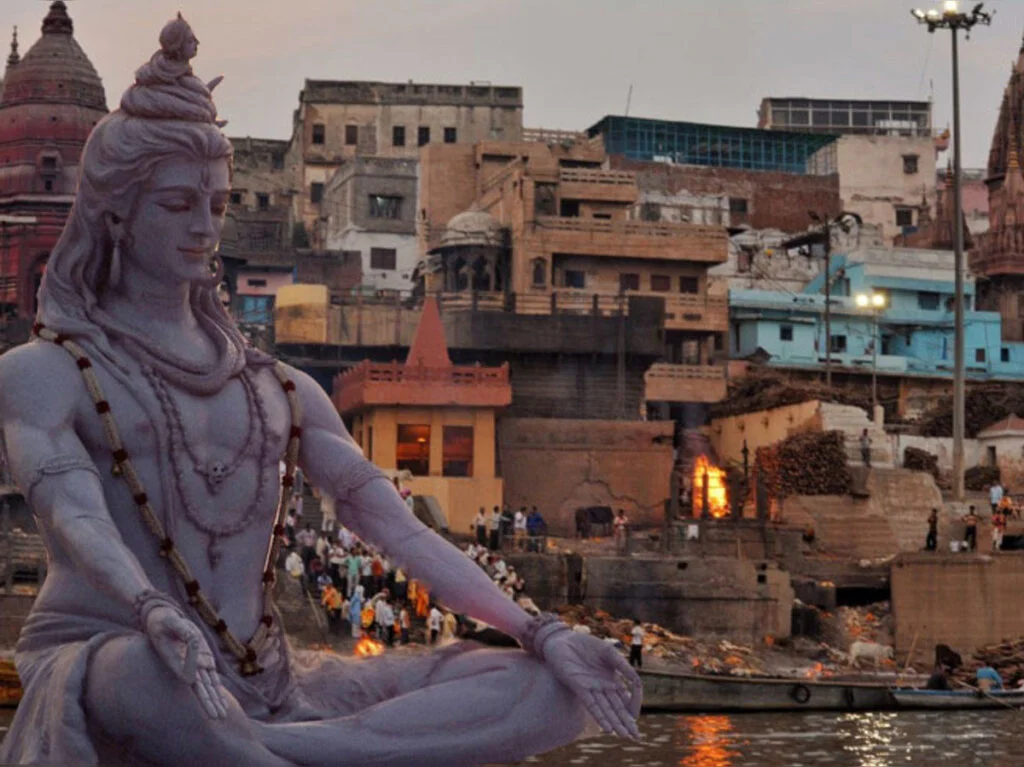
On the western bank of the sacred Ganga, in the heart of Varanasi, stands Manikarnika Ghat—a place unlike any other in the world. Here, fire never sleeps, prayers never end, and the soul is believed to find its final freedom.
Manikarnika Ghat is not only the most ancient cremation ground of Kashi; it is also revered as a Shakti Peeth, where the Divine Mother’s presence is felt in her most mysterious and powerful form. Pilgrims do not come here to celebrate life—but to understand it.
Manikarnika Ghat in the Shakti Peeth Tradition
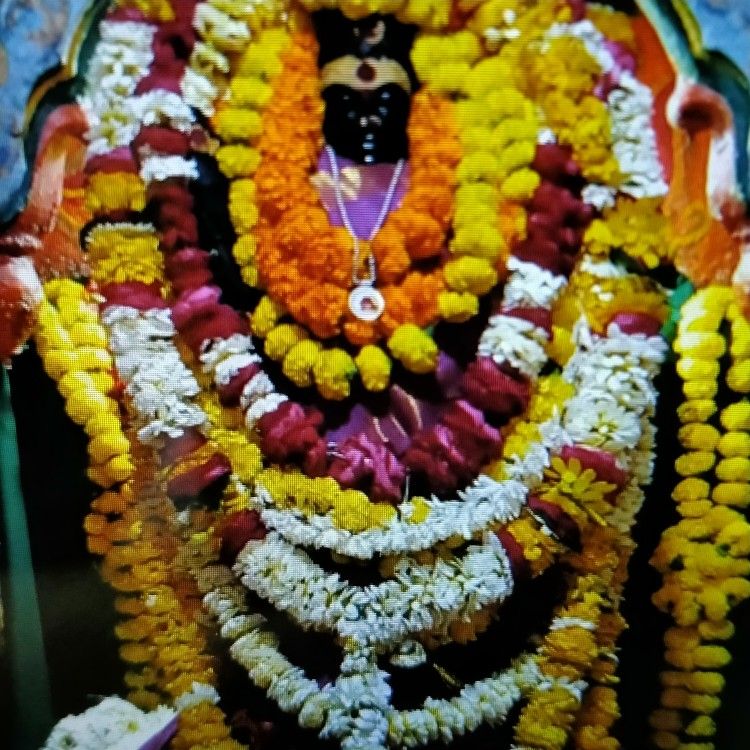
In the sacred geography of Shakti Peethas, certain places became charged with Divine Feminine energy during the cosmic events connected to Goddess Sati. At Manikarnika, tradition holds that Sati’s ear ornament (mani–karnika) fell here, sanctifying the land as a seat of Shakti.
The Goddess worshipped in this region is often associated with Maa Vishalakshi, whose temple stands close to Kashi Vishwanath. In local spiritual understanding, the Shakti here is subtle yet intense—guiding souls not toward worldly fulfillment, but toward moksha (liberation).
The Sacred Legends of Manikarnika
Two ancient legends flow together at this ghat:
One tells of Lord Shiva and Goddess Parvati bathing here, when Shiva’s jeweled earring fell into the earth, creating the Manikarnika Kund, a sacred well that still exists today.
Another links the ghat to the Shakti Peeth tradition, where Sati’s ornament sanctified this ground during Shiva’s cosmic grief.
It is also believed that Lord Vishnu performed intense austerities here and dug the sacred kund with his divine effort, making this spot one of the oldest spiritual centres on earth.
The Spiritual Meaning: Death as a Doorway, Not an End
Manikarnika Ghat is called a Maha Smashan—the great cremation ground. Yet, in Kashi, death is not feared.
According to belief:
Souls cremated here are freed from rebirth
Lord Shiva himself whispers the Taraka Mantra into the departing soul’s ear
The eternal fire used for cremations is said to have burned since time immemorial
This is why people travel from distant lands to spend their final days in Varanasi. Here, death is not darkness—it is release.
Cremation Rituals: Simplicity, Equality, Truth
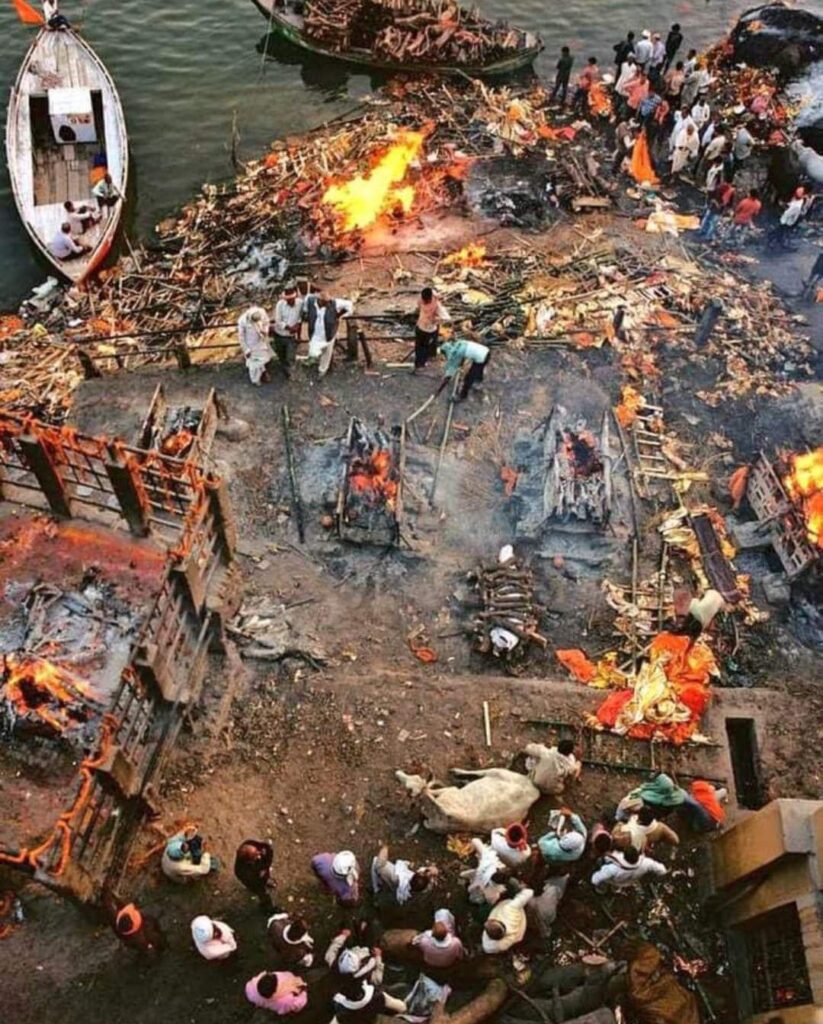
The rituals at Manikarnika are direct and unadorned:
The body is brought wrapped in white cloth
It is bathed in the Ganga
The eldest son lights the pyre using the eternal flame
After burning, ashes are immersed into the river
There are no distinctions of caste, wealth, or status in death. Kings and commoners meet the same fire. This quiet equality is one of Manikarnika’s greatest teachings.
The cremation rites are traditionally overseen by the Dom community, hereditary custodians of the sacred flame.
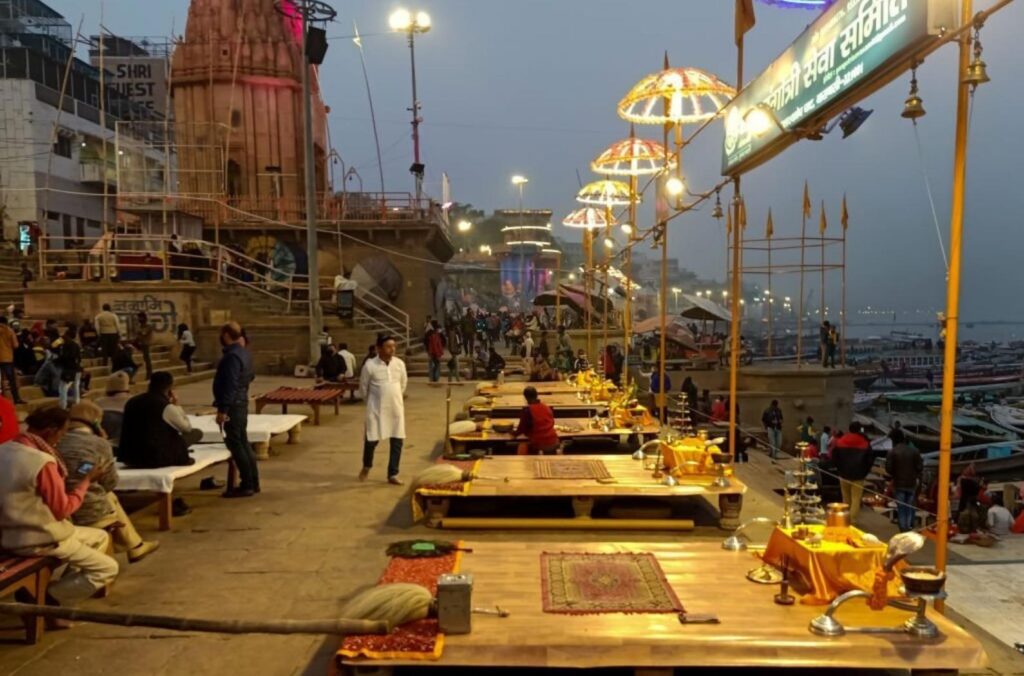
Daily Life at the Ghat: A Living Philosophy
Despite its solemn purpose, Manikarnika is never silent:
Wood sellers stack logs along narrow lanes
Priests chant softly
Sadhus meditate nearby
Boats drift past carrying pilgrims who watch respectfully from the river
Life flows beside death without conflict. This coexistence teaches a powerful lesson: impermanence is not sorrowful—it is natural.
Visiting Manikarnika Ghat: A Guide with Reverence
Best Time to Visit
Early morning (5–7 AM): calm, contemplative
October to March: comfortable weather
How to Reach
Walk or e-rickshaw from Godowlia
Boat view from Dashashwamedh or Scindia Ghat is respectful and recommended
Visitor Etiquette
❌ No photography of cremations
Maintain silence and distance
Dress modestly
Do not interfere with rituals
This is not a tourist attraction—it is a sacred threshold.
Nearby Sacred Places
Kashi Vishwanath Temple – heart of Shaiva devotion
Vishalakshi Temple – Shakti aspect of Kashi
Scindia Ghat – quieter river steps nearby
Together, they form a powerful spiritual triangle within Varanasi.
A Personal Reflection: What the Fire Teaches
Standing at Manikarnika, I felt something loosen inside me. The fear of endings. The need to hold on.
The fire burned steadily, without anger or haste. It did not judge the body it consumed. It simply did its work.
In that moment, I understood:
Liberation is not about escaping life—it is about meeting truth without resistance.
Conclusion: The Silent Grace of the Final Shakti
Manikarnika Ghat Shakti Peeth does not promise miracles. It offers something rarer—clarity.
Here, the Mother does not decorate or console. She releases.
To visit Manikarnika is to remember that every breath is precious, every moment temporary, and every soul—eventually—free.