
Saptashrungi Shakti Peetha – The Goddess of Seven Sacred Hills
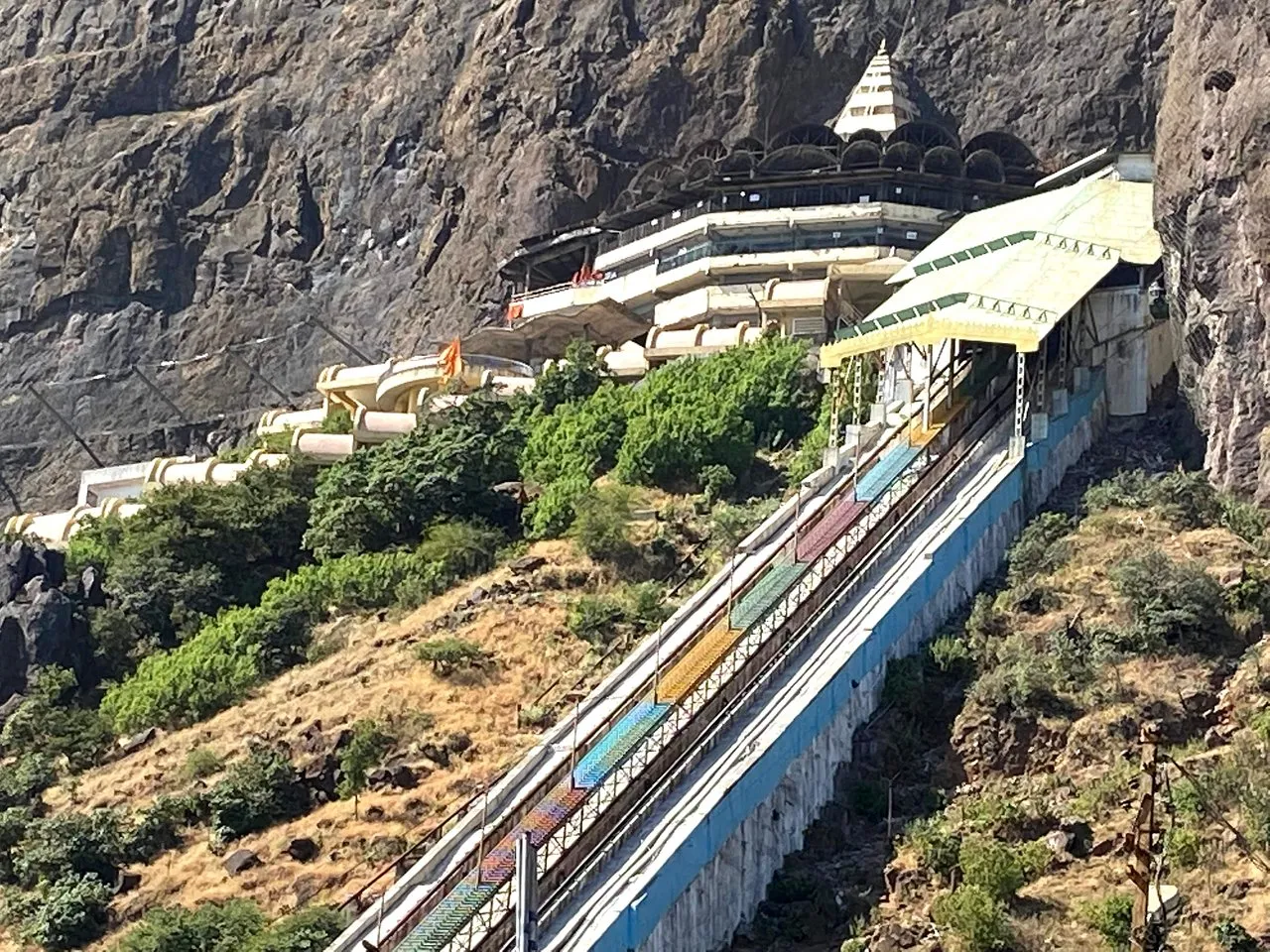
Saptashrungi Shakti Peetha, also revered as Vani Devi or Saptashrungi Nivasini, is one of Maharashtra’s most awe-inspiring abodes of the Divine Mother. Rising dramatically from the Sahyadri ranges near Vani town in Nashik district, this ancient shrine is known for its living rock-cut idol, eighteen divine arms, and a sacred geography shaped by seven mountain peaks.
Here, Shakti is not imagined—she is felt in stone, wind, ascent, and silence.
Mythological Significance of Saptashrungi Shakti Peetha
According to Shakti Peetha tradition, when Goddess Sati’s body was dismembered by Lord Vishnu’s Sudarshana Chakra to pacify Shiva’s cosmic grief, sacred sites emerged across the subcontinent.
Saptashrungi is traditionally believed to be the place where Sati’s right arm (or hand) fell, sanctifying the hills with protective, sustaining Shakti.
The Goddess here is worshipped as Mahishasuramardini, the slayer of the buffalo demon—symbol of ego, injustice, and chaos.
The Meaning of “Saptashrungi” – Sevenfold Protection
The name Saptashrungi means “She who dwells among seven peaks.”
Spiritually, the seven hills are interpreted as:
The seven chakras
The seven rishis
Seven layers of divine protection around the Mother
This geography turns the pilgrimage itself into a moving meditation.
The Rock-Hewn Goddess and Temple Form
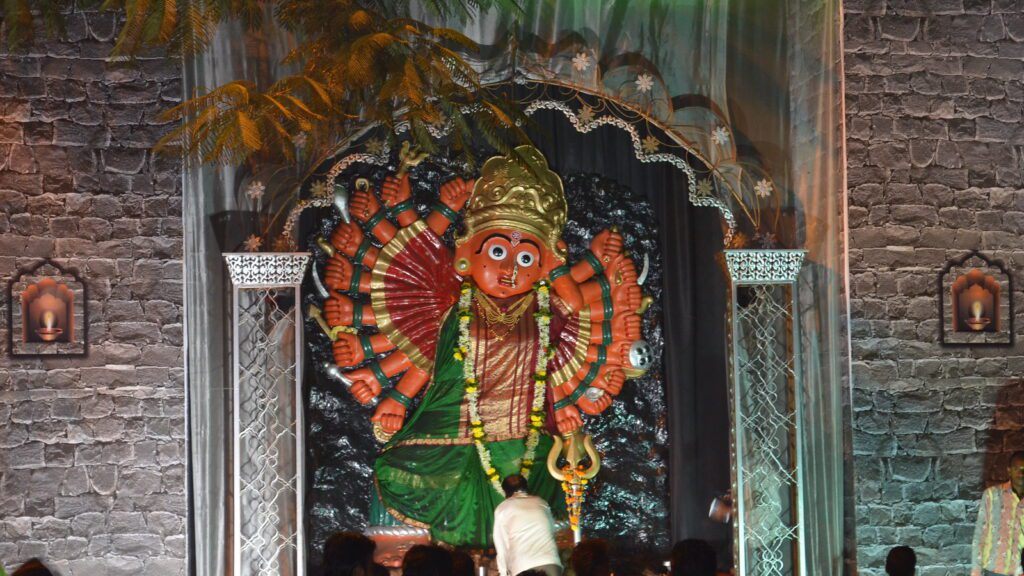
The sanctum is a natural cave carved into a vertical rock face. The idol is an ek-shila (single stone) swayambhu murti, about 8 feet tall, continuously adorned with sindoor, silver ornaments, and weapons.
Iconography Highlights:
Eighteen arms holding divine weapons
Fierce yet maternal expression
Natural stone contours still visible beneath adornments
Recent conservation efforts carefully removed excessive sindoor to reveal the ancient form of the murti, reaffirming its antiquity.
History and Patronage
References to Saptashrungi Vani Devi appear in Puranic lore and regional ballads. Over centuries:
Medieval Deccan rulers supported the shrine
Maratha chieftains built steps and dharamshalas
Tribal and pastoral communities preserved folk rituals
In modern times, temple trusts and the state have added ropeway access, safety infrastructure, and pilgrim amenities—while retaining the sacred atmosphere.
Festivals and Ritual Life
Navratri (Chaitra & Ashwin)
The most powerful time at Saptashrungi Shakti Peetha:
Deepmalas illuminate the cliffs
Night-long bhajans and Lalita Sahasranama recitations
Gondhal folk performances narrate Devi’s victories
Dussehra (Vijayadashami)
Celebrates the triumph of Shakti over darkness—many devotees begin new ventures after darshan.
Monthly Purnima
Full-moon days attract steady crowds seeking protection and fulfillment.
Pilgrimage Experience
Reaching the Shrine
Steps: Traditional stairway with resting points
Ropeway: Safe, scenic, elder-friendly (weather permitting)
Darshan & Sevas
Free and special darshan queues
Abhishekam, kumkum archana, Navachandi havans
Offerings include coconuts, red chunri, bangles, lotus flowers
Facilities include water points, shoe stands, medical aid, and rest areas.
Art, Music, and Living Tradition
Saptashrungi is deeply rooted in folk devotion:
Ovi songs sung by women
Gondhal performances invoking Devi’s presence
Local crafts linked to vermillion, silver masks, and ritual threads
Faith here is sung, walked, and remembered.
Visiting Guide
📍 Location: Near Vani, Nashik district, Maharashtra
⛰️ Elevation: ~1,230 meters
⏰ Best time: October–February
🚗 Access: Nashik → Vani by road; ropeway or steps to shrine
Nearby Sacred Circuit
Nashik Trimbak region
Together, they form a powerful Maharashtra Shakti circuit.
Final Reflection
At Saptashrungi, the Goddess does not descend—she rises, from rock, from hill, from earth itself. Her eighteen arms remind devotees that protection comes in many forms, and that faith, when climbed step by step, always meets grace at the summit.
2 thought on “Saptashrungi Shakti Peetha: The Eighteen-Armed Goddess of Seven Sacred Hills”