
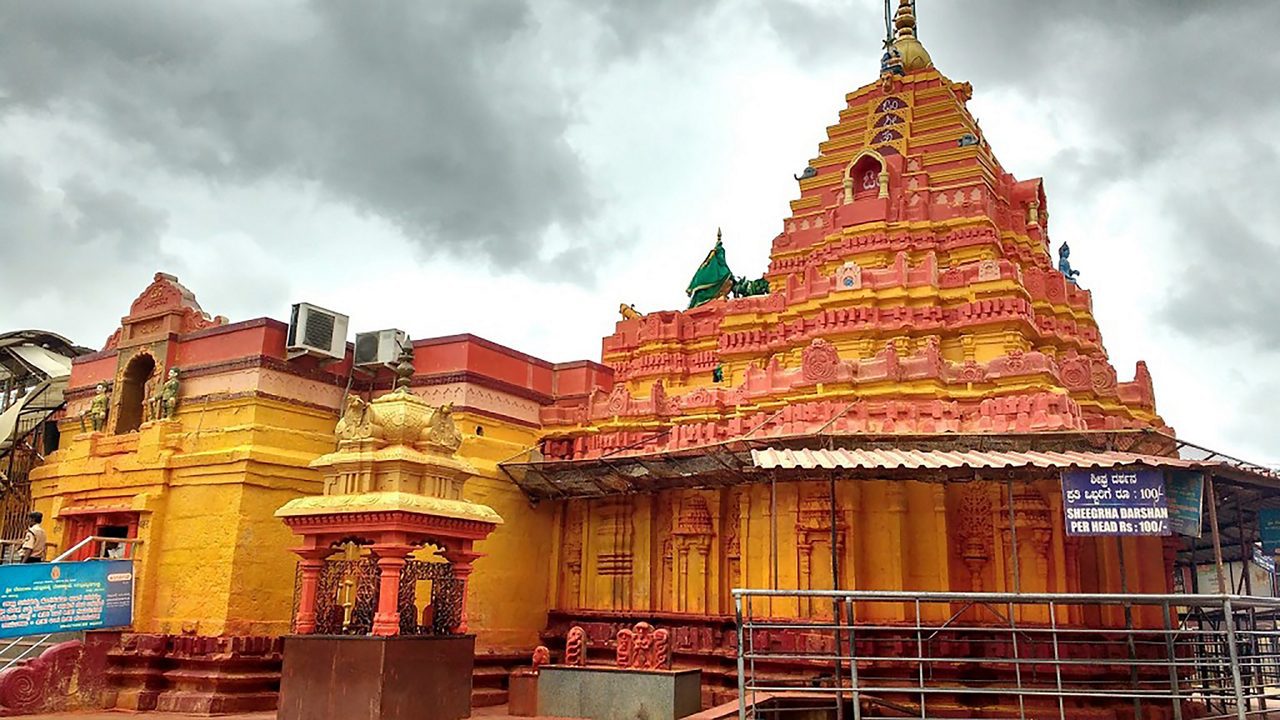
Yellamma Temple Saundatti – Chandika Devi Peetham of Renuka
The Yellamma Temple of Saundatti, formally revered as Chandika Devi Peetham, stands among South India’s most ancient and socially resonant Shakti shrines. Perched atop Yellamma Gudda in Belagavi district, Karnataka, this hill temple has for centuries drawn farmers, pastoral communities, saints, traders, and seekers—each finding refuge in the fierce yet compassionate presence of the Mother.
Here, the Goddess is worshipped as Yellamma, Renuka, and Chandika—three names, one living Shakti.
Sacred Geography of Chandika Devi Peetham
The temple rises from the Malaprabha river basin, commanding expansive views of semi-arid plains and seasonal streams.
Location: Saundatti (Savadatti), Belagavi district, Karnataka
Hill: Yellamma Gudda (Siddhachal Parvat)
Landscape: Granite hill, sacred wells, and sunrise vistas
Pilgrims traditionally bathe at sacred water points before ascending for darshan, reinforcing the idea of ritual purification through landscape.
Mythological Foundations – Renuka, Parashurama, and Yellamma
Two powerful mythic streams converge at the Yellamma Temple Saundatti.
The Renuka–Parashurama Narrative
In Puranic lore, Renuka, wife of Sage Jamadagni and mother of Parashurama, is tested for her chastity. When she falters, Jamadagni orders his sons to behead her. Parashurama obeys, later restoring her through divine grace.
In Deccan folk retellings, Renuka survives as Yellamma—a universal mother who embraces the marginalized, the landless, and the suffering.
Chandika – The Folk Shakti
Parallel village traditions worship Elamma/Yellamma as a disease-warding, fertility-granting goddess. Over time, this folk deity is Sanskritized as Chandika, merging village devotion with temple orthodoxy.
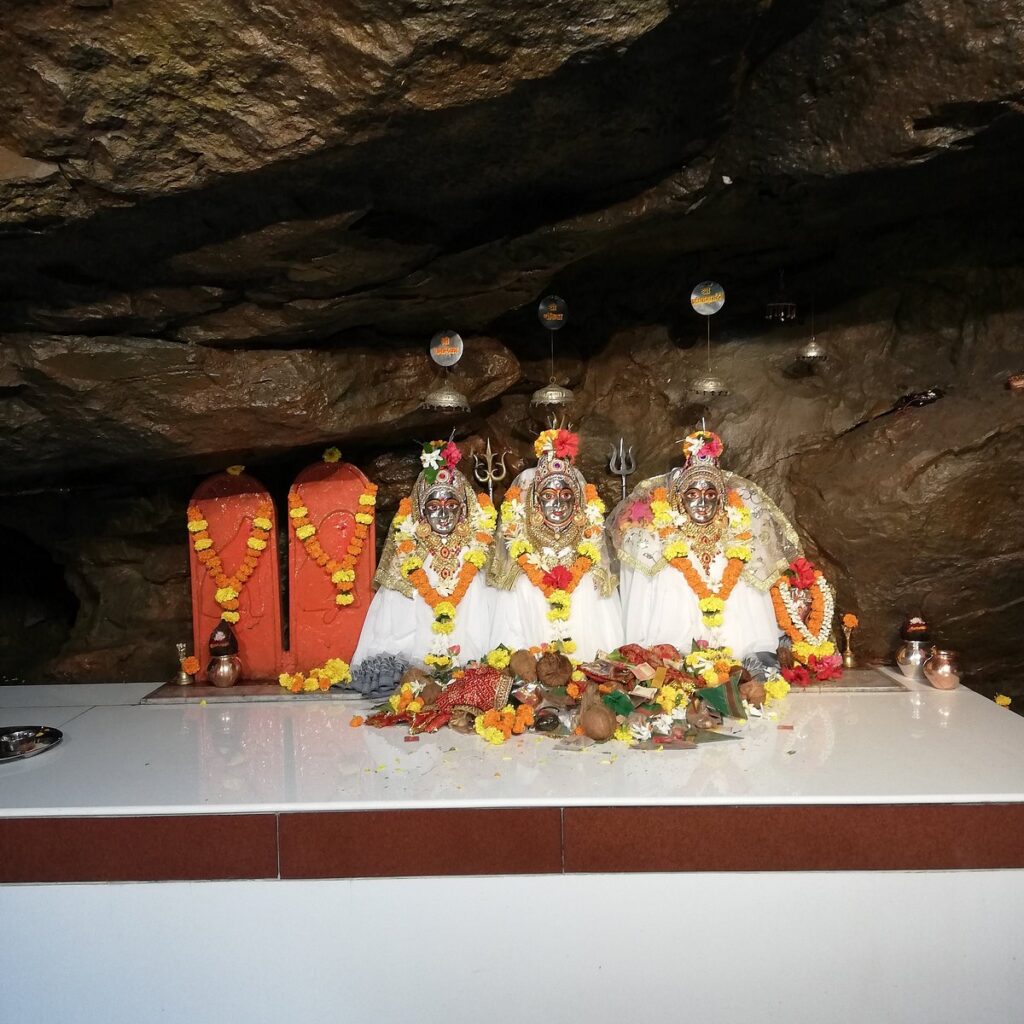
Shakti Peetham Identity
While not always listed among the classical 51 pan-Indian Shakti Peethas, Chandika Devi Peetham is revered as a regional Shakti seat, where Renuka’s head or Shakti essence is believed to have manifested.
This makes Yellamma Temple Saundatti a living Shakti Peetham—defined as much by devotion as by scripture.
Historical Evolution of Yellamma Temple
Archaeological traces in the region indicate goddess worship before the rise of formal temples.
Key Phases:
Pre-6th century: Proto-goddess hill worship
Chalukya–Rashtrakuta era (6th–10th c.): Early structural sanctums
Kalyana Chalukya & Yadava period: Stone mandapas emerge
Vijayanagara era (14th–16th c.): Endowments and festival expansion
Post-Vijayanagara: Nayaka and Maratha repairs
Modern era: State-managed temple with welfare oversight
The present structure reflects layered rebuilding, rather than a single architectural moment.
Temple Layout and Iconography
The sanctum houses the stone icon of Yellamma/Chandika, adorned with a silver kavacha and vivid eye features.
Notable Elements:
Garbhagriha with mixed Dravida–Nagara influences
Sub-shrines to Parashurama, Jamadagni, Ganapati, Bhairava
Sacred wells like Jogulabhavi for ritual bathing
Long stairways and rest pavilions up the hill
Painted panels narrating Renuka’s story guide devotees visually through myth.
Ritual Calendar and Major Fairs
Banada Hunnime
The largest annual gathering, marked by:
Head-load offerings
Processions of the utsava murti
Community feasts and night-long bhajans
Navaratri & Chaitra Festivals
Chandi homa, kumari puja, and folk dances blend classical Shakta ritual with local tradition.
Monthly Jataras
Agrarian cycles are ritually tied to Yellamma’s blessings, reinforcing her role as protector of livelihood.
Cultural & Social Significance
Yellamma is deeply rooted in Dhangar, Kuruba, Lingayat, and artisan communities. Devotional songs mix Kannada, Marathi, and folk dialects.
Historically associated with the jogathi/devadasi system, the temple today actively supports:
Legal prohibition of dedications
Rehabilitation and education initiatives
Cultural preservation without exploitation
This evolution marks Yellamma as a goddess who adapts with time.
How to Visit Yellamma Temple Saundatti
Best time: October–February
Nearest cities: Belagavi, Hubballi, Dharwad
Dress code: Modest attire recommended
Photography: Restricted near sanctum
Combine the visit with nearby heritage sites like Aihole, Pattadakal, and Badami for a complete Malaprabha temple circuit.
Final Reflection
At Chandika Devi Peetham, divinity is not distant. It speaks through myth, song, reform, and resilience. The goddess who emerged from Renuka’s ordeal continues to shelter millions—fierce in justice, tender in compassion, and timeless in relevance.